
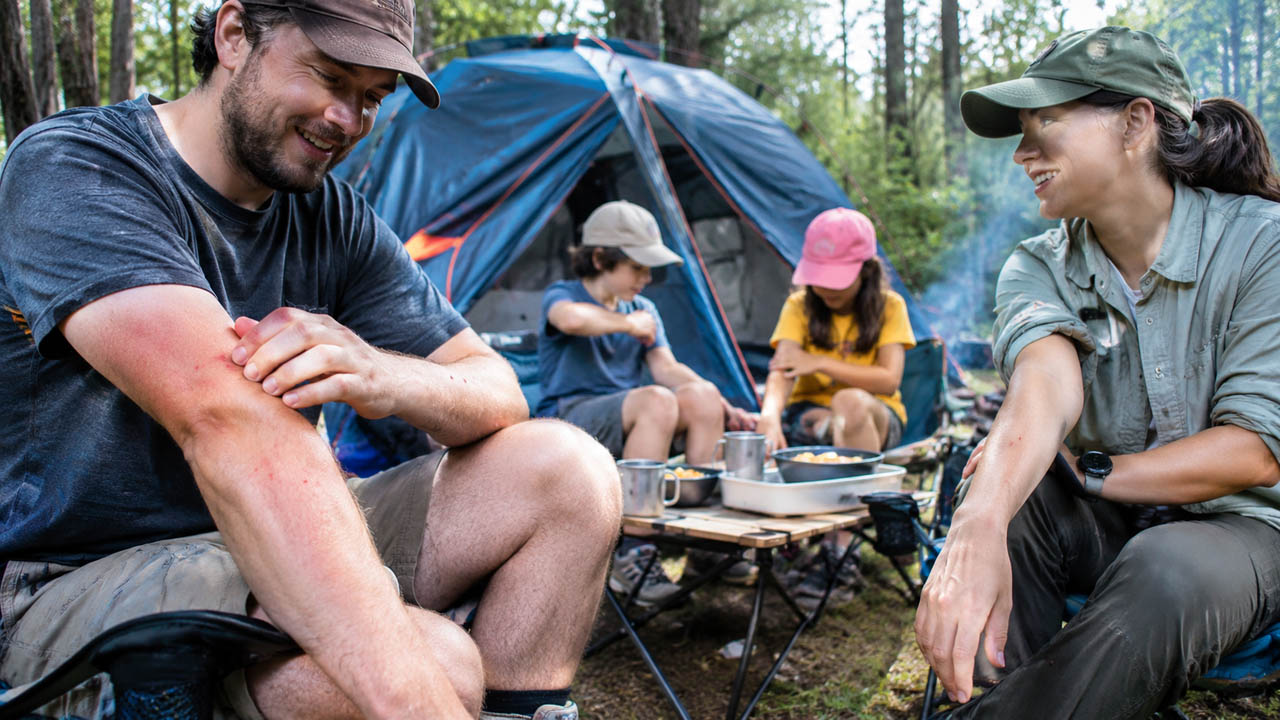

The best insect repellent for camping isn’t necessarily the strongest formula on the shelf. A wooded campsite with ticks, a lakeside campground buzzing with mosquitoes, and a family weekend outdoors call for different considerations.
Finding the best insect repellent for camping starts with three questions: Which insects are present? How long will you be exposed? And will the formula work comfortably alongside your camping gear?
Our three research-based picks cover different priorities, with one practical goal: help you choose protection that fits your trip rather than simply buying the most aggressive-looking bottle.
Affiliate disclosure: InfoBaswara may earn a commission from qualifying purchases when affiliate links are active, at no additional cost to you. Our recommendations are independently researched.
Choose Protection That Fits
The best insect repellent for camping should match your actual exposure, not just advertise a long protection time.
Here are three options worth comparing:
| Product | Best fit | Main trade-off |
| Sawyer 20% Picaridin Spray | General camping and gear-conscious users | Spray and lotion have different protection durations |
| OFF! Deep Woods V | Wooded campsites with multiple biting insects | DEET aerosol requires careful handling around gear and heat |
| Murphy’s Lemon Eucalyptus Spray | Campers preferring a registered botanical formula | Shorter mosquito protection and species-specific tick claims |
These aren’t hands-on test winners. They’re researched recommendations based on documented formulations, labeled claims, and practical camping needs.
Sawyer 20% Picaridin Spray
Best for: General camping and gear compatibility
Sawyer is our leading all-around candidate for the best insect repellent for camping, particularly when backpacks, synthetic clothing, and outdoor accessories are part of your setup.
Its 20% picaridin spray is advertised to protect against mosquitoes and ticks for up to 12 hours, and biting flies, gnats, chiggers, and sand flies for up to eight hours.
The manufacturer also states that its formula won’t damage plastics or synthetic coatings.
Why it fits: Broad insect coverage, relatively low odor, and practical compatibility with common outdoor gear.
Not ideal for: Anyone assuming the spray provides the lotion’s longer, 14-hour protection claim.
Trade-off: Protection claims vary by insect and formulation. Always check the exact bottle.
See the Sawyer 20% Picaridin Spray.
OFF! Deep Woods V Aerosol
Best for: Wooded campsites and varied biting insects
For campers expecting mosquitoes, ticks, black flies, or chiggers, OFF! Deep Woods V deserves consideration as the best insect repellent for camping in a more insect-heavy setting.
This particular aerosol contains 25% N,N-diethyl-meta-toluamide (DEET). OFF! specifies up to eight hours of mosquito protection and lists several additional biting insects.
Why it fits: Clearly documented insect coverage and a familiar spray application.
Not ideal for: Campers who prefer to avoid aerosol cans or need a formula with specifically documented compatibility across sensitive gear materials.
Trade-off: The pressurized can is flammable. Keep it away from campfires, stoves, and excessive heat.
The best insect repellent for camping shouldn’t introduce an avoidable campsite storage hazard.
Review the OFF! Deep Woods V specifications.
Murphy’s Lemon Eucalyptus Spray
Best for: Botanical-formula preference
For campers seeking a plant-derived active ingredient, Murphy’s offers another approach to the best insect repellent for camping.
Its registered spray contains 30% oil of lemon eucalyptus (OLE). The manufacturer claims up to six hours against mosquitoes, four hours against deer ticks, and more than eight hours against lone star and brown dog ticks.
Why it fits: A documented botanical formulation with insect-specific claims.
Not ideal for: Campers expecting identical protection against every biting insect, or families who haven’t checked the applicable age restrictions.
Trade-off: The Centers for Disease Control and Prevention (CDC) advises against OLE or para-menthane-diol (PMD) repellents for children under three. Murphy’s describes updated regulatory labeling for its particular formulation, with additional California restrictions. Follow the label applicable to your location.
For the best insect repellent for camping, botanical shouldn’t mean unverified.
Explore Murphy’s Lemon Eucalyptus Spray.
The Campsite Protection Fit Check
Here’s where choosing the best insect repellent for camping becomes more useful than comparing ingredients alone.
| Your camping situation | What to prioritize |
| Lakeside family campground | Mosquito coverage, user age, application directions |
| Wooded trails and brush | Both mosquito and tick claims |
| Gear-heavy backpacking | Formula compatibility with synthetic materials |
| Extended outdoor activity | Species-specific protection duration and label-directed reapplication |
| Botanical preference | EPA registration, target insects, and age restrictions |
The overlooked detail: Eight hours against mosquitoes doesn’t necessarily mean eight hours against ticks or biting flies.
The best insect repellent for camping must cover the insects you actually expect to encounter.
For broader campsite prevention, our upcoming guide, How to Keep Bugs Away While Camping, will address clothing, campsite habits, and additional protection.
How We Evaluated
Our best insect repellent for camping selections prioritize five factors:
- Insect coverage and species-specific claims.
- Protection duration for the exact formulation.
- Label instructions and user restrictions.
- Application convenience and gear compatibility.
- Practical value for the intended camping situation.
We reviewed manufacturer documentation and public-health guidance rather than conducting independent field tests.
No formula receives an automatic advantage for being stronger, botanical, or more expensive.
The best insect repellent for camping is the one whose documented benefits match the buyer’s needs.
Safety Beyond the Spray
Even the best insect repellent for camping is only one layer of bite prevention.
Choose an Environmental Protection Agency (EPA)-registered product, follow its label, and wear protective clothing when appropriate. Permethrin products intended for clothing and equipment must not be applied directly to skin.
When using sunscreen, apply it first and repellent afterward.
Remember that a skin-applied repellent is different from a campsite-area mosquito device. Our upcoming Best Mosquito Repellent Device for Camping guide will compare that separate category.
Neither approach guarantees a bite-free campsite.
Which Repellent Should You Choose?
The best insect repellent for camping depends on the trip you’re actually taking.
Choose Sawyer if broad coverage and gear compatibility matter most. Consider OFF! Deep Woods V for varied biting insects, provided its aerosol format suits your setup. Murphy’s is worth examining if you prefer an EPA-registered botanical formula and its label fits your circumstances.
Before purchasing, compare the exact formulation, container size, and applicable warnings. Prices and availability may change, so check current details with the retailer.
Ultimately, the best insect repellent for camping is the one you’ll use correctly, comfortably, and consistently—not necessarily the one with the biggest number on its label.
Sources and Product Documentation
- CDC — Preventing Mosquito Bites
- EPA — Find the Right Insect Repellent
- Sawyer — 20% Picaridin Product Information
- OFF! — Deep Woods V Product Information
- Murphy’s — Lemon Eucalyptus Product Information
