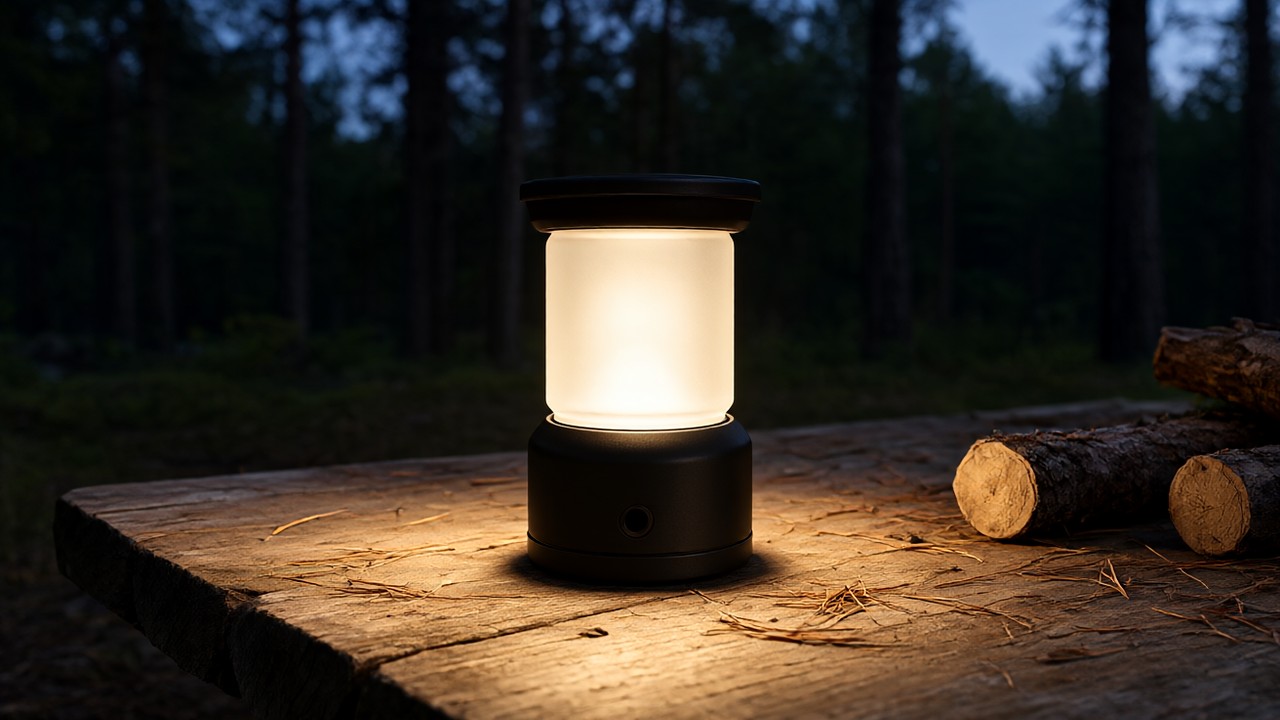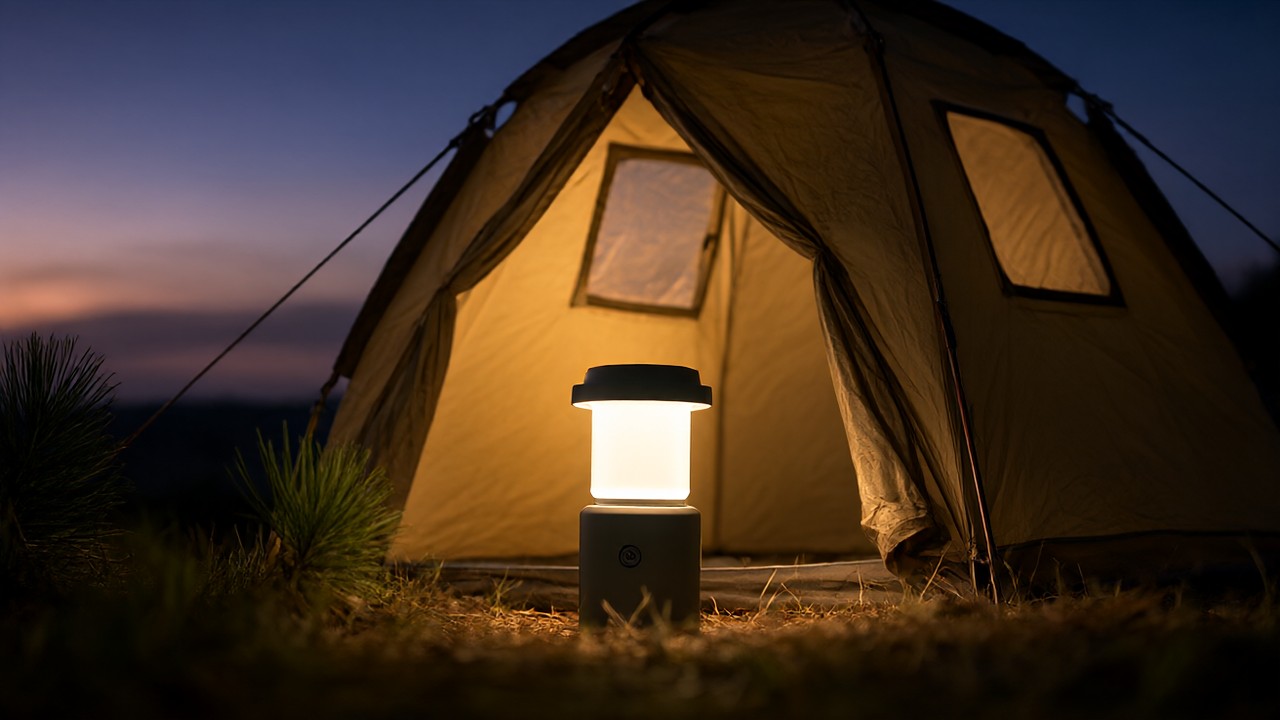

Rechargeable (Li-ion) lanterns dominate the market because they offer high capacity, USB-C charging, and the ability to charge a phone. Battery (alkaline) lanterns still win on availability, instant swap, and cold-weather reliability.
For most campers, rechargeable is the better primary light; alkaline is the better backup. A rechargeable lantern is a portable light powered by a built-in lithium-ion battery that recharges via USB, often with a USB output port that charges external devices.
The short version: buy rechargeable for your main lantern. Keep a small alkaline lantern (or spare power bank) in the car kit for emergencies. The two are complements, not competitors.
Key facts: a 5,000 mAh Li-ion lantern on medium (200 lumens) runs 10 to 15 hours and recharges a phone once. Alkaline capacity per weight is lower but cold-tolerant. Li-ion output drops below freezing; alkaline handles cold better. USB-C is now standard on mid-range and premium rechargeables.
How Rechargeable (Li-ion) Lanterns Work
Rechargeable lanterns use a built-in lithium-ion battery pack, usually 2,000 to 10,000 mAh. The battery charges via USB (Micro-USB on older models, USB-C on newer ones) and powers the LED driver. Many include a USB output port that turns the lantern into a power bank for a phone or headlamp.
The advantages are clear. High energy density means more runtime per ounce. Recharging costs pennies. USB-C charging is fast and universal.
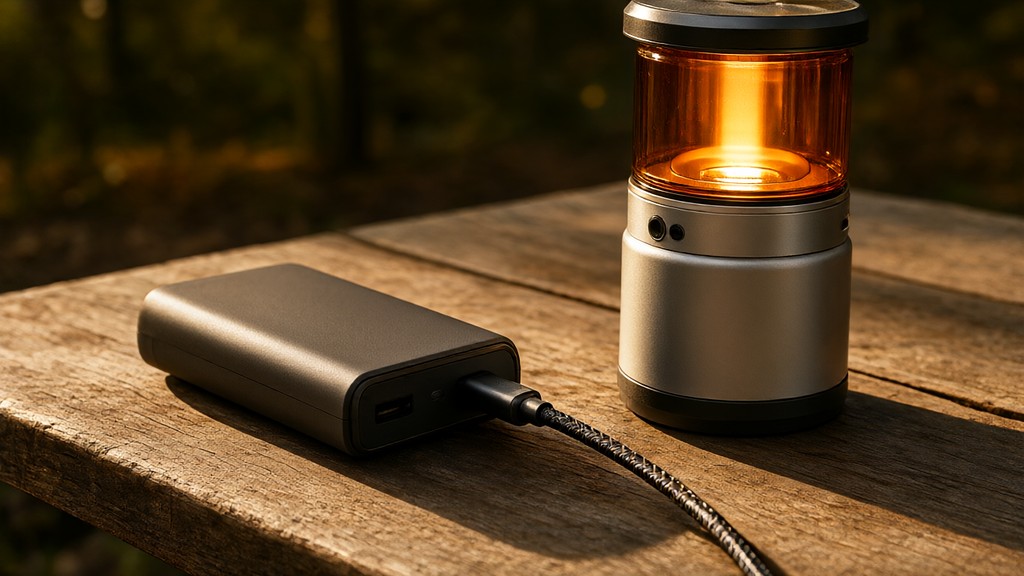
The power-bank feature is genuinely useful on multi-day trips. Running cost over the life of the lantern is near zero. Picture the difference: a rechargeable lantern charges silently from a USB cable in the car; an alkaline lantern needs a trip to the store for fresh batteries.
The disadvantages are also real. A dead battery means no light until you find power. Li-ion output drops in freezing temperatures. The battery degrades over charge cycles (500+ cycles is good; cheaper cells degrade faster). And the upfront cost is higher: $40 to $150 versus $15 to $40 for alkaline.
Rechargeable lanterns have a built-in battery that cannot be swapped for alkaline. Some hybrid models accept both, but they are uncommon. Check the spec before buying if dual-fuel matters to you.
How Alkaline Lanterns Work
Alkaline lanterns run on disposable AA, AAA, C, or D cells. You buy batteries, insert them, and replace them when they die. No charging, no cables, no waiting.
The advantages: batteries are available in every gas station and grocery store. Swap takes seconds. Long shelf life (5 to 10 years) makes them ideal for emergency kits. Cold tolerance is better than Li-ion. And the lantern itself is cheaper because there is no battery or charging circuit inside.
The disadvantages: recurring cost adds up (a weekend trip can burn $5 to $10 in batteries). Capacity per weight is lower. Disposal is a hassle. And the lantern is only as good as the batteries you brought; forget spares and you are in the dark.
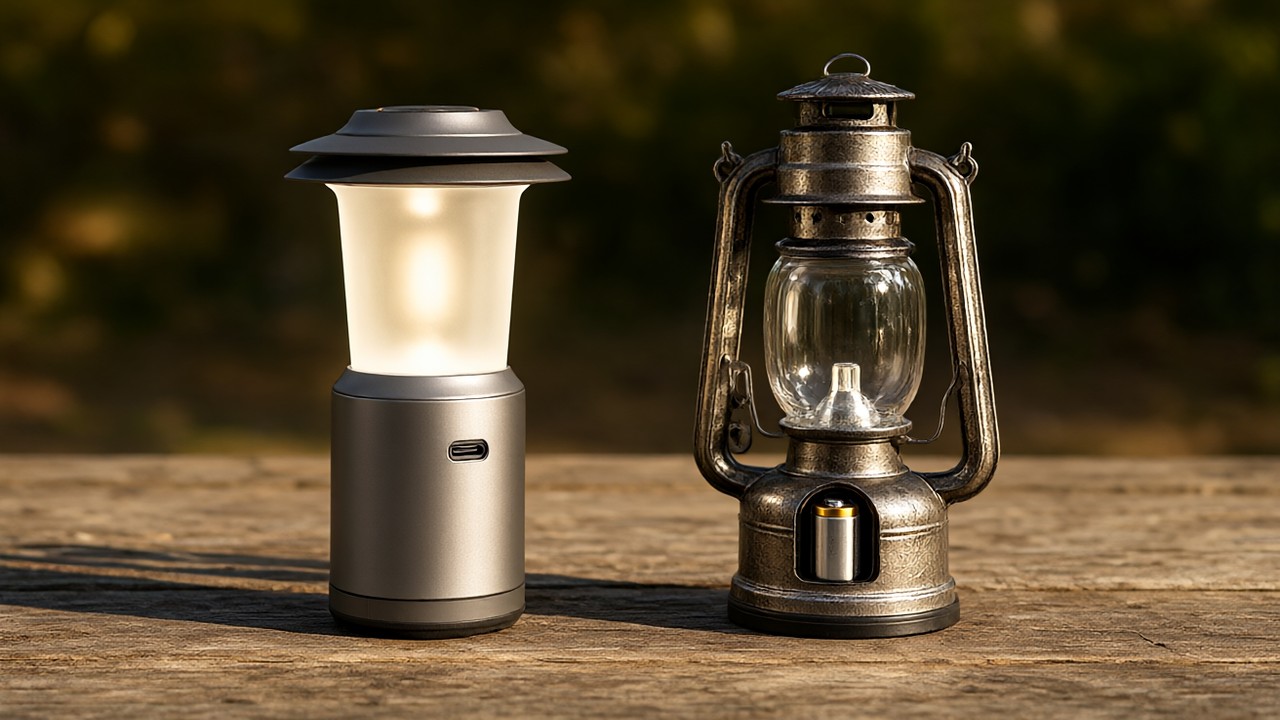
Side-by-Side Comparison
| Factor | Rechargeable (Li-ion) | Alkaline (disposable) |
|---|---|---|
| Upfront cost | $40 to $150 | $15 to $40 |
| Running cost | Near zero (electricity) | $5 to $10 per weekend trip |
| Runtime (medium, 200 lumens) | 8 to 15 hours per charge | Varies by battery size; 10 to 30 hours on D cells |
| Recharge time | 2 to 6 hours (USB-C faster) | Instant swap |
| Weight | Lighter per lumen-hour | Heavier (batteries are dense) |
| Cold weather | Output drops below freezing | Better cold tolerance |
| Availability of fuel/power | Needs USB power source | Batteries sold everywhere |
| Phone charging | Yes (power bank mode) | No |
| Shelf life | Months (self-discharge) | 5 to 10 years |
| Environmental impact | Lower (reusable) | Higher (disposable) |
Rechargeable wins on running cost, weight, and features. Alkaline wins on availability, cold tolerance, and shelf life. Neither is universally better; they solve different problems.
One insight that surprises first-time buyers: the hidden cost of alkaline is not the batteries, it is the weight. A weekend trip on D-cell alkaline can mean carrying 2 to 3 pounds of batteries, which is heavier than the lantern itself. Rechargeable lanterns are lighter per lumen-hour because Li-ion has roughly 10 times the energy density of alkaline.
Runtime and Battery Life in the Real World
Runtime claims are the most misleading spec in lantern marketing. Three things to check before you trust the number on the box.
Which mode the runtime refers to. “Up to 100 hours” usually means the lowest mode (5 to 10 lumens), not the mode you will actually use. Look for runtime at medium (200 to 300 lumens) separately.
Battery degradation. Li-ion capacity drops over charge cycles. A lantern rated for 10 hours on a new battery may deliver 7 hours after a year of use. Quality brands publish cycle life; 500+ cycles is good.
Cold weather. Li-ion output drops below freezing. Alkaline handles cold better but with lower capacity. If you camp in winter, add a 20 to 30 percent runtime margin or carry a spare power bank kept warm in your sleeping bag.
Runtime and brightness move in opposite directions: doubling lumens roughly halves runtime on the same battery. A 400 lumen lantern on high lasts about half as long as the same lantern on 200 lumens.
Cold Weather Performance
Cold is the one scenario where alkaline beats Li-ion outright. Lithium-ion chemistry slows below freezing because ion mobility in the electrolyte drops and internal resistance rises; output falls and capacity shrinks. A lantern that runs 10 hours at 70 degrees Fahrenheit may run 6 hours at 20 degrees.
Alkaline batteries handle cold better, though their capacity also drops. For winter camping, the best setup is a rechargeable lantern kept warm (inside your jacket or sleeping bag during the day) plus an alkaline backup. Never leave a Li-ion lantern in a cold car overnight.
Some premium lanterns use LiFePO4 (lithium iron phosphate) batteries, which tolerate cold better and last more cycles, but they are heavier and cost more. For most three-season campers, standard Li-ion is fine.
Environmental Impact
Rechargeable lanterns are clearly better for the environment over their lifetime. A single Li-ion battery replaces hundreds of disposable alkaline cells. The catch is end-of-life: Li-ion batteries contain cobalt, nickel, and lithium that must be recycled properly, not tossed in the trash.
Alkaline batteries are less toxic but still waste resources. Most municipalities accept alkaline batteries in regular trash, but recycling programs exist and are better. If you use alkaline, buy in bulk and recycle when possible.
For the lowest impact, buy a quality rechargeable lantern once and use it for 5 to 10 years. The battery, not the LED, is the limiting factor; choose a brand with a replaceable battery if you plan to keep it long-term.
When to Choose Rechargeable
Choose rechargeable if you camp more than 3 or 4 times a year, car camp or RV camp, want a power bank feature, camp in mild weather, or value low running cost and low waste. The upfront cost pays for itself within a season or two of regular use.
When to Choose Alkaline
Choose alkaline if you camp rarely (a few times a year), need a long-shelf-life emergency light, camp in freezing temperatures, want the cheapest upfront option, or prefer the simplicity of swapping batteries. Alkaline is also the right choice for a backup lantern that lives in the car kit.
The Hybrid Approach (What Most Experienced Campers Do)
Most experienced campers carry both. A rechargeable lantern is the primary light for tent and table. A small alkaline lantern (or a headlamp with spare batteries) lives in the car kit as backup. A power bank covers phone charging and lantern top-ups on long trips.
This setup costs more upfront but eliminates the single-point-of-failure problem: a dead rechargeable battery in the backcountry is a real problem, while a dead rechargeable with an alkaline backup is a minor inconvenience.
When Rechargeable Is the Wrong Choice
Rechargeable is not always the better option. Three cases where alkaline or another source wins.
Extreme cold without backup. Li-ion output drops below freezing. If you camp below 20 degrees Fahrenheit regularly, carry an alkaline backup or a LiFePO4 model.
Emergency kits and long storage. Alkaline batteries last 5 to 10 years on a shelf. Li-ion self-discharges in months. For a lantern that lives in a car kit for years, alkaline is more reliable.
No access to power. If you cannot recharge (remote trips, no car, no power bank), alkaline is the only option that works. Rechargeable is useless without a power source.
Putting It Together
Buy rechargeable for your main lantern and keep alkaline as backup. The combination covers every scenario: long trips, cold weather, dead batteries, and emergencies. For brightness guidance, see our lumens guide. For the full selection framework, read our LED camping lanterns complete guide.
Related reading: waterproof, solar, power-bank, and battery care camping lantern guides.
If you camp in a hot tent, your lantern choice interacts with stove safety and ventilation. See our hot tent stove guide for CO safety.
Last updated: 2026-11-17. Editorial content based on manufacturer specifications and ANSI FL1 standards. Amazon affiliate links may appear in related guides.