
Best rechargeable camping lanterns combine high capacity, USB-C charging, and power-bank output in a package that costs pennies to run.
A best rechargeable camping lantern is a portable light powered by a built-in lithium-ion battery that recharges via USB and often charges external devices. The right one depends on how many nights you camp, whether you need to charge a phone, and how much weight you will carry. This guide ranks rechargeable lanterns by use case and shows what to look for.
The short version: for most campers, the best rechargeable camping lantern is a 200 to 400 lumen upright with a 5,000+ mAh battery, USB-C charging, and IPX4 or better. Budget $40 to $80. It runs 10 to 15 hours on medium and charges a phone once.
Key facts: Li-ion dominates the rechargeable market. USB-C is now standard on mid-range and premium models. Power-bank output is a genuine feature on multi-day trips. Li-ion output drops below freezing, so winter campers need a backup.
What Makes a Rechargeable Lantern Good
Four features separate a good rechargeable lantern from a mediocre one. Check all four before buying.
- Battery capacity (mAh). 2,000 to 3,000 mAh is enough for a weekend. 5,000+ mAh covers a week or charges a phone. 10,000+ mAh is basecamp territory.
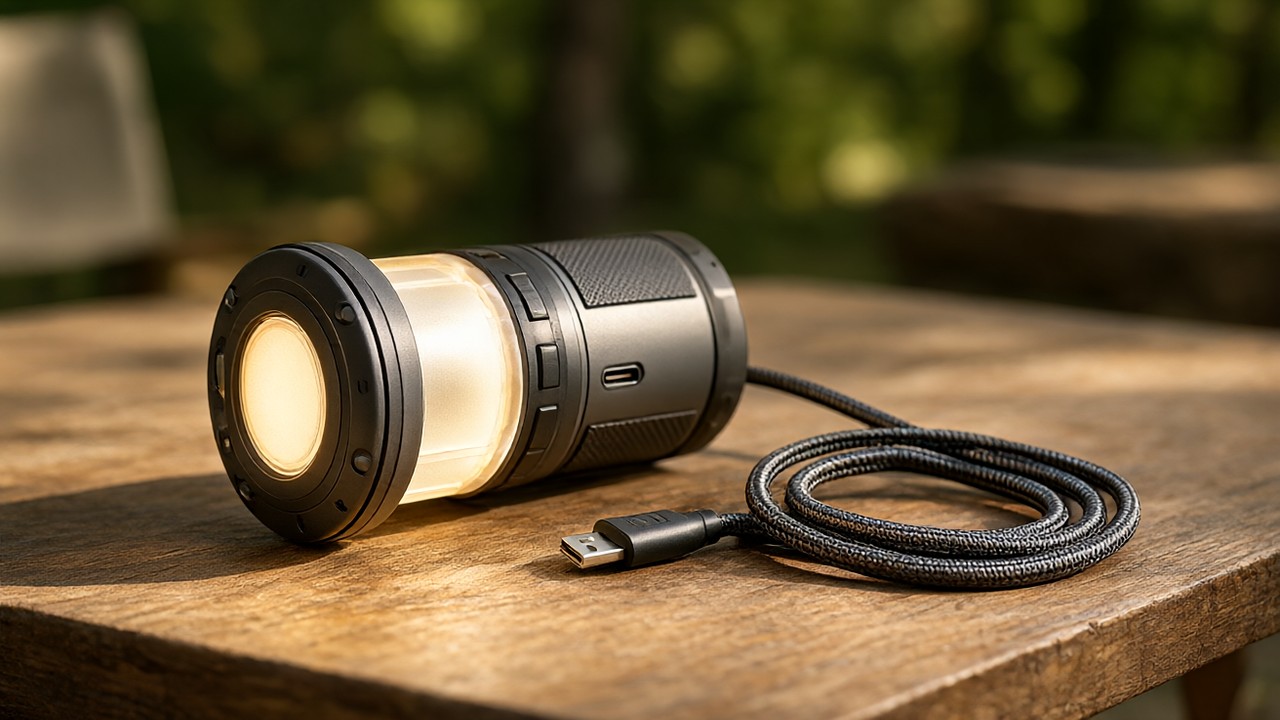
- USB-C charging. Faster than Micro-USB and uses the same cable as your phone. Avoid proprietary chargers.
- Power-bank output. A USB output port that charges a phone or headlamp. Useful on multi-day trips. Output is slow (1 to 2 amps), so it is an emergency top-up, not a full charge.
- Runtime at medium. Check runtime at 200 to 300 lumens, not at the lowest setting. A lantern that runs 100 hours on 5 lumens but 4 hours on 200 lumens is not a 100-hour lantern.
One insight that surprises first-time buyers: the power-bank feature is worth more than an extra 200 lumens. A 200 lumen lantern that charges your phone on day three is more useful than a 400 lumen lantern that dies on day two. Capacity and output current matter more than peak brightness for multi-day trips.
Rechargeable Lantern Profiles
| Profile | Lumens | Battery | Weight | IP rating | Price | Best for |
|---|---|---|---|---|---|---|
| Tent and table | 200 to 400 | 3,000 to 5,000 mAh | 12 to 20 oz | IPX4+ | $40 to $80 | Most weekend campers |
| Backpacking | 50 to 150 | 1,000 to 2,000 mAh | Under 8 oz | IPX6+ | $25 to $50 | Weight-conscious hikers |
| Group and basecamp | 600 to 1,000 | 10,000+ mAh | 2 to 4 lb | IPX4+ | $60 to $150 | Family and group camping |
| Ultralight | 50 to 100 | 500 to 1,000 mAh | Under 4 oz | IPX4+ | $20 to $35 | Minimalist backpackers |
Most campers need only the tent-and-table profile. Add a specialized profile only if your camping demands it.
Verdicts by Use Case
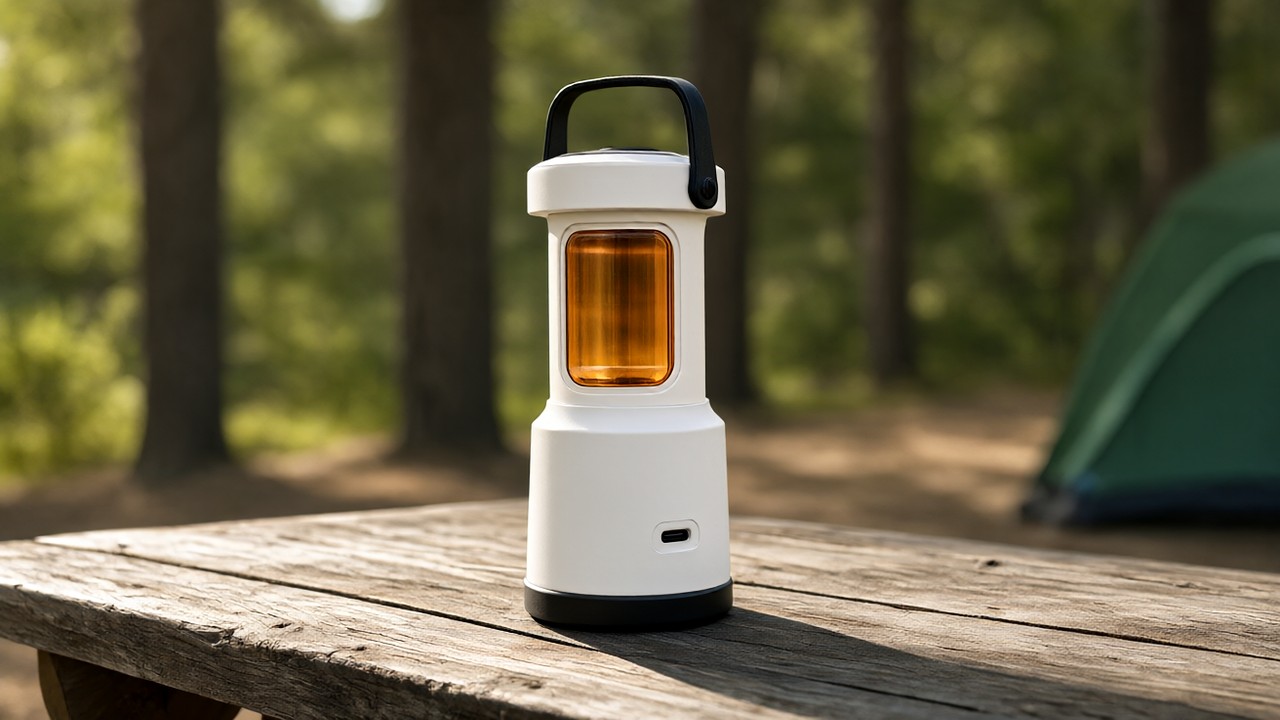
Best for most campers (tent and table): a 200 to 400 lumen upright with 5,000+ mAh, USB-C, power-bank output, IPX4 or better, and a dimmer. Budget $40 to $80. Well-known options in this range include models from Goal Zero, BioLite, and Black Diamond.
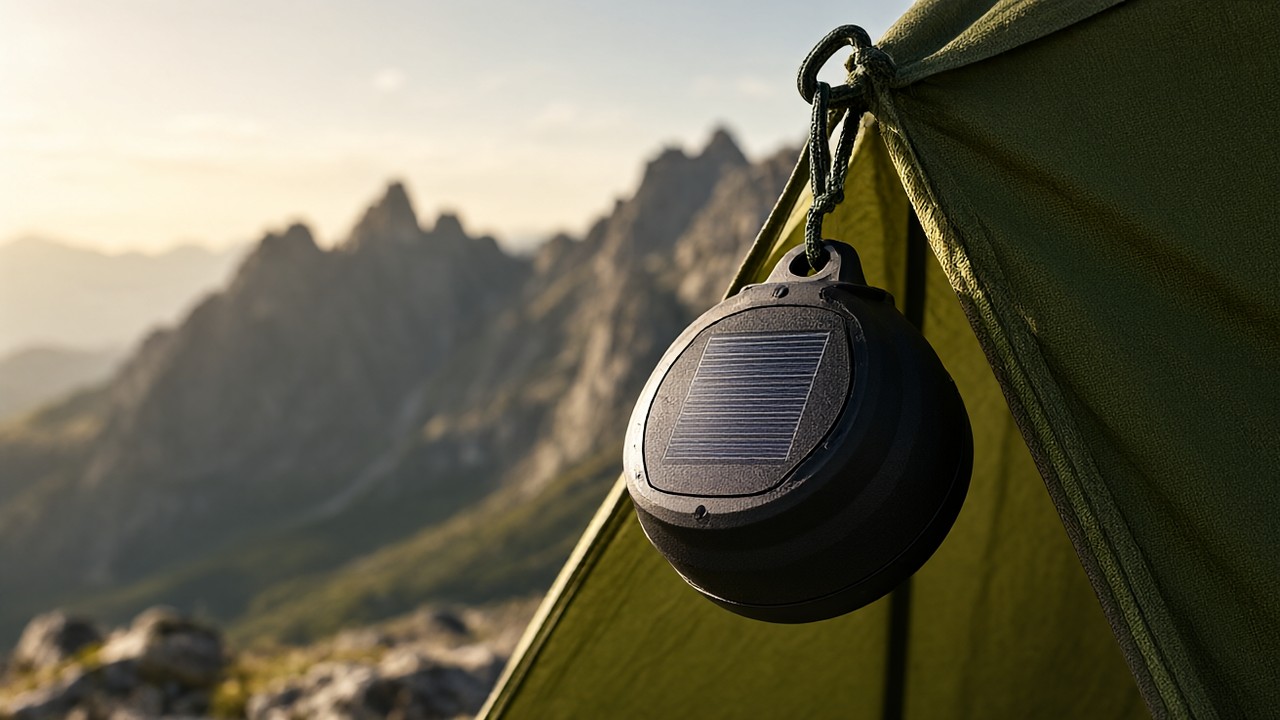
Best for backpacking: a collapsible or inflatable lantern under 8 oz with 50 to 150 lumens, solar or USB recharge, and IPX6 or better. Budget $25 to $50. LuminAID and MPOWERD Luci are common choices.
Best for group and family camping: a 600 to 1,000 lumen upright with 10,000+ mAh, USB-C, and power-bank output. Budget $60 to $150. Weight matters less; prioritize runtime and brightness.
Best for ultralight: a 50 to 100 lumen lantern under 4 oz. Budget $20 to $35. Brightness is minimal but weight is negligible.
Best budget (under $40): a basic rechargeable without USB-C or power-bank output. It works, it is cheap, and it recharges from any USB source.
What to Look For (and What to Ignore)
Look for: ANSI FL1 rated output, runtime at medium (not just low), USB-C charging, IPX4 or better, a warm-white mode, a continuous dimmer, and a stable base.
Ignore: peak lumen claims above 1,000, “up to 100 hours” runtime (usually means 5 lumens), touch-sensitive controls, and proprietary chargers.
Red flags: no ANSI rating, no IP rating, runtime quoted only at the lowest mode, and brands that do not publish medium-brightness runtime.
Common Buying Mistakes
Picture a camper on day three, phone at 2 percent, wishing they had bought the lantern with the USB output instead of the one with 200 extra lumens. Four mistakes to avoid.
Trusting “up to X hours.” That number is almost always the lowest mode. Check runtime at medium brightness.
Ignoring cold weather. Li-ion output drops below freezing because ion mobility in the electrolyte slows; capacity can fall 30 to 40 percent at 20 degrees Fahrenheit. Winter campers need a backup or a LiFePO4 model.
Buying without a dimmer. Fixed modes often jump from too dim to too bright. A continuous dimmer is worth the upgrade.
Overpaying for capacity. A 10,000 mAh battery is useless if you camp two nights. Match capacity to trip length.
When Rechargeable Is the Wrong Choice
Rechargeable is not always the better option. Three cases where alkaline or another source wins.
Extreme cold without backup. Li-ion output drops below freezing. If you camp below 20 degrees Fahrenheit regularly, carry an alkaline backup or a LiFePO4 model.
Emergency kits and long storage. Alkaline batteries last 5 to 10 years on a shelf. Li-ion self-discharges in months. For a lantern that lives in a car kit for years, alkaline is more reliable.
No access to power. If you cannot recharge (remote trips, no car, no power bank), alkaline is the only option that works.
Putting It Together
Start with the tent-and-table profile (200 to 400 lumens, 5,000+ mAh, USB-C, IPX4+). Add specialized profiles only if your camping demands it.
For tent-specific picks, see our best camping lanterns for tents.
Related reading: waterproof, solar, budget, kids, power-bank, and battery care camping lantern guides.
For the full selection framework, see our LED camping lanterns complete guide. For brightness numbers, read our lumens guide. For power source trade-offs, see our rechargeable vs battery comparison. For a buying guide, read our best LED camping lanterns guide.
If you camp in a hot tent, your lighting choice interacts with stove safety. See our hot tent stove guide.
Last updated: 2026-11-17. Editorial buying guide based on published specifications and ANSI FL1 standards. Amazon affiliate links may appear.