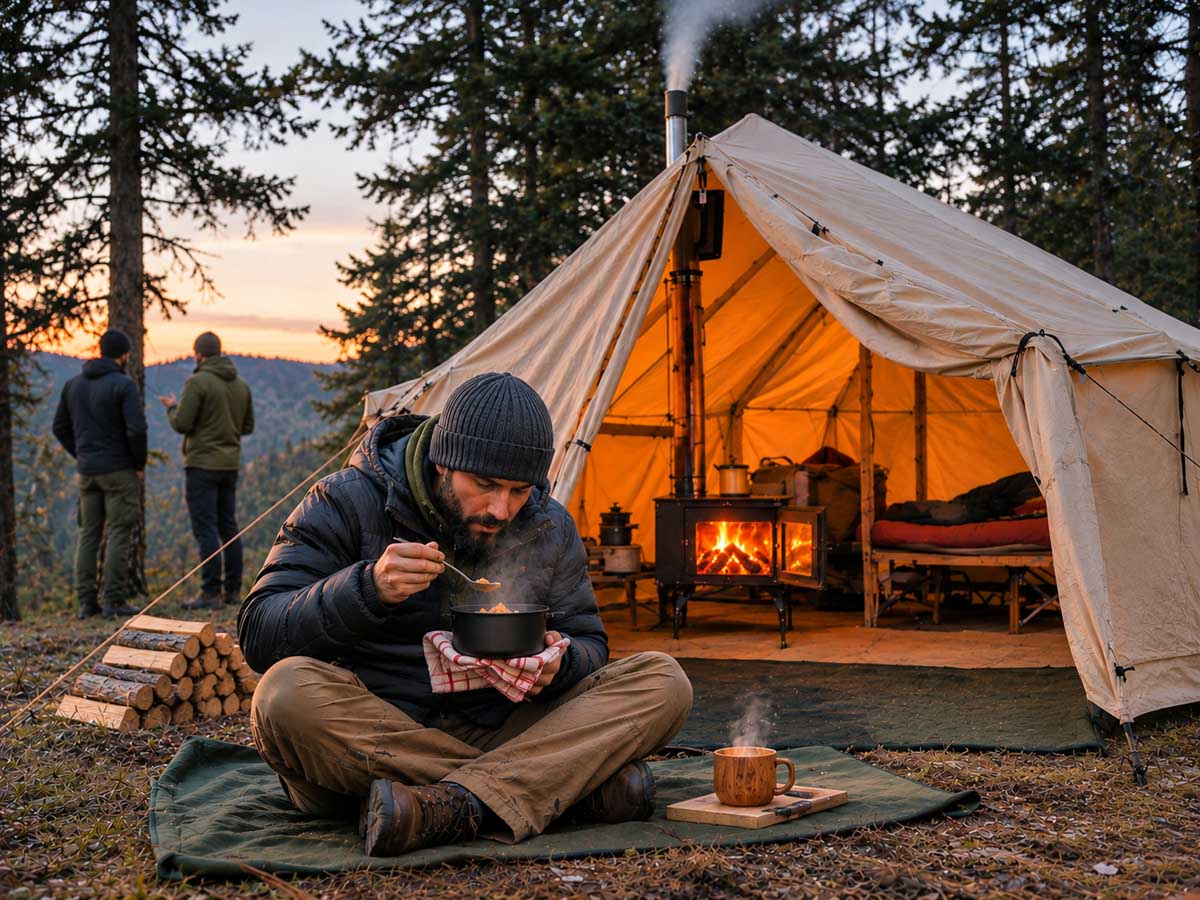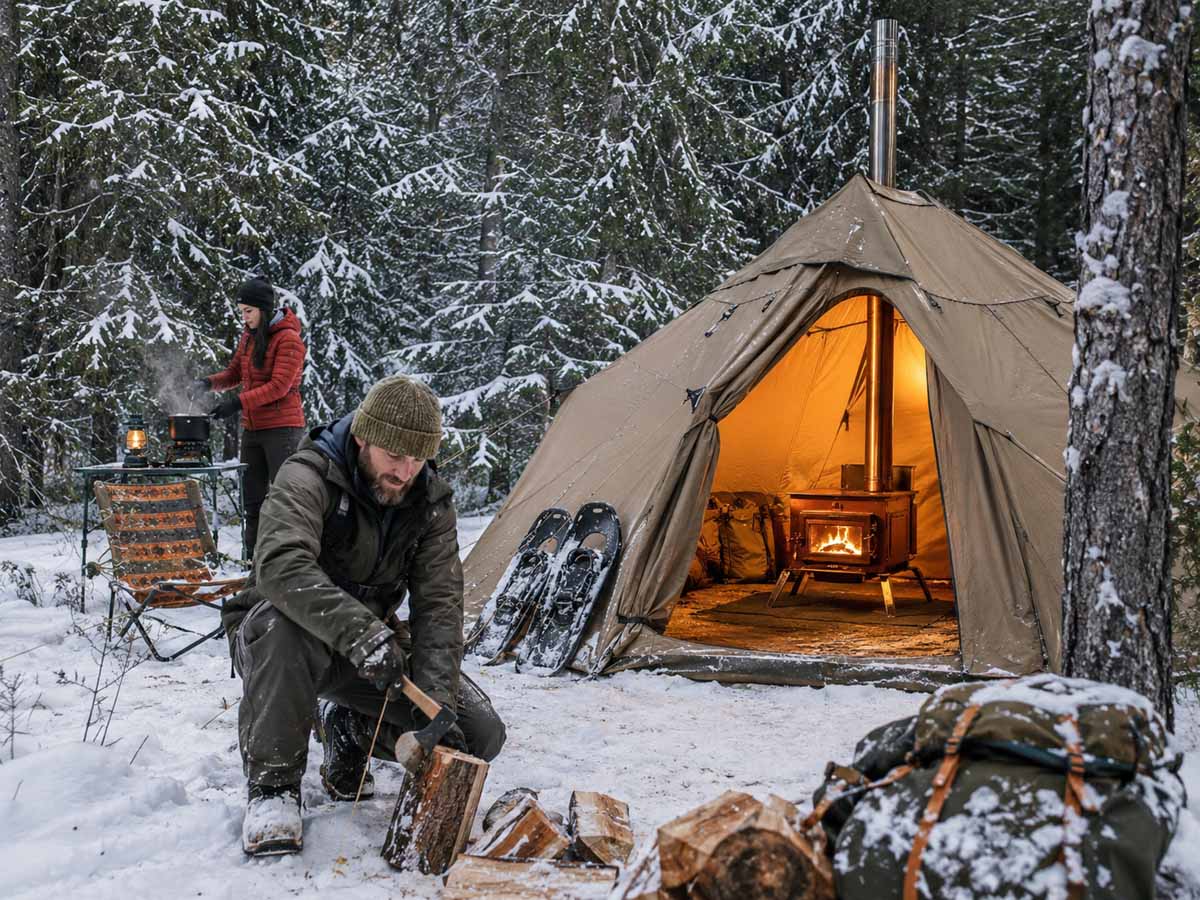
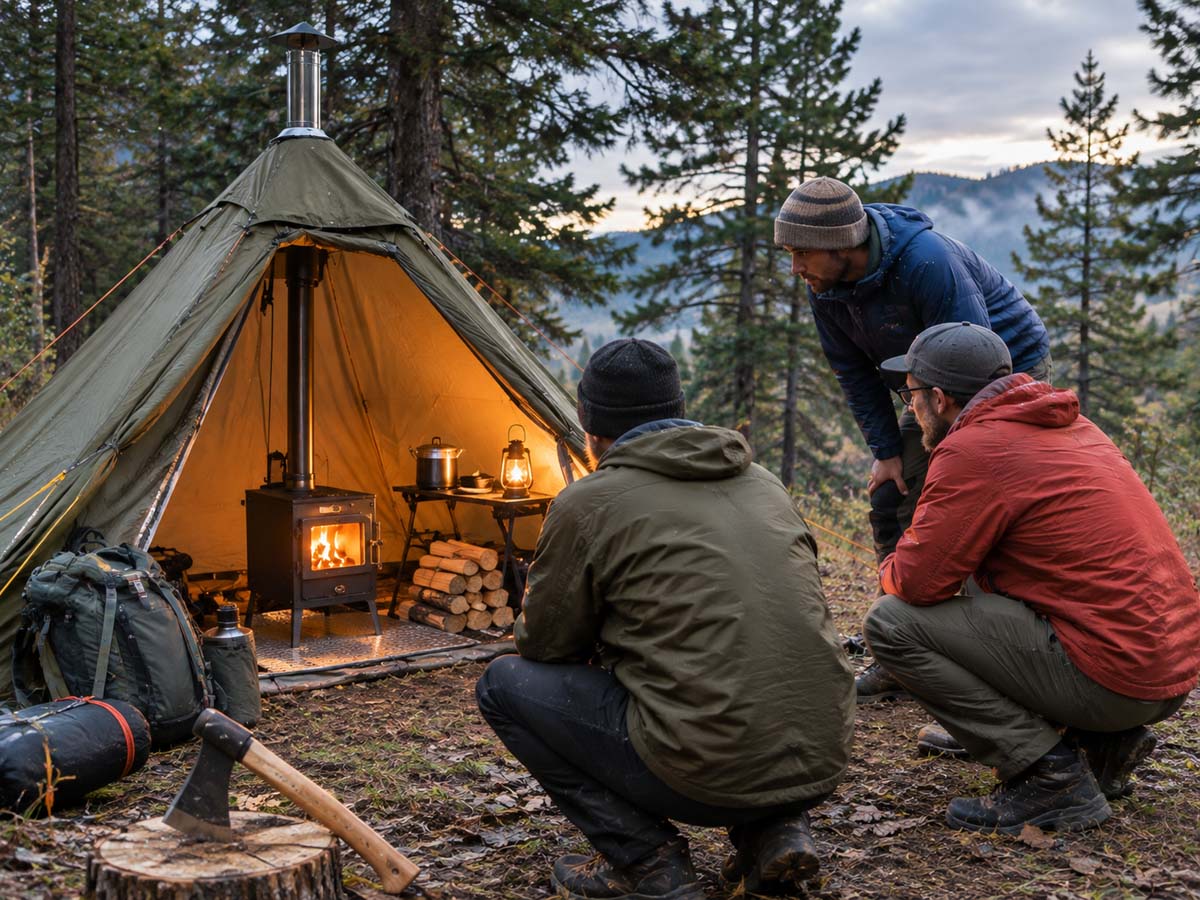

Hot tent camping sounds like the perfect answer to a freezing night: a sheltered place to warm up, dry gloves, and enjoy a winter campsite without retreating to the car. But the stove is only one part of the equation. A mismatched chimney, inadequate sleeping gear, or a campsite that prohibits fires can turn an appealing purchase into an expensive mistake.
Hot tent camping makes sense only when the trip, equipment, and operator fit together. This guide helps you decide whether to build a heated shelter system—or keep your cold-weather setup simpler.
What Is Hot Tent Camping?
Hot tent camping typically means using a shelter specifically designed to accommodate a compatible wood-burning stove, with a chimney routed through a purpose-built, heat-resistant stove jack. The design must account for stove placement, clearances, and exhaust routing.
The stove can make waking hours more comfortable, but hot tent camping does not eliminate winter exposure. When the fire goes out, temperatures drop. Your sleeping bag, insulated pad, clothing, and shelter must still suit the forecast without relying on active heat.
Is a Heated Tent Worth It?
The question is whether hot tent camping justifies its weight, cost, fuel handling, and attention.
| Your trip | Better starting point | Why |
| Drive-in winter base camp | Consider a hot tent | Gear weight matters less; time at camp is longer |
| Long-distance backpacking | Compare unheated shelters first | Stove, pipe, and fuel add bulk and setup work |
| Family weekend | Evaluate usable floor space | Sleeping capacity is not the same as safe stove clearance |
| First overnight below freezing | Build cold-weather skills first | A heater cannot replace a suitable sleep system |
For a camper who spends hours at a snowy base camp, hot tent camping may earn its place. For someone who hikes all day and goes straight to sleep, the trade-off may not pay off.
Choose Your Camping Style
Hot tent camping works differently for vehicle-supported camping, hunting camps, and backcountry trips. Start with three questions: How far will you carry the setup? How many people and bags must fit around the stove? How much time will you spend awake inside?
In hot tent camping, a four-person label does not mean four sleepers plus a stove fit comfortably. Look for usable floor dimensions, peak and sidewall height, door access, and the stove manufacturer’s required clearances—not just the advertised capacity.
If you’re considering hot tent camping for a first winter trip, choose a manageable location with a realistic exit plan rather than testing unfamiliar gear during a major storm.
Understand the Complete Setup
Think of hot tent camping as a connected system, not a tent with an accessory tossed inside. The shopping list may include the shelter, approved stove, compatible chimney sections, stove-jack arrangement, required heat shielding, suitable floor protection, and a safe method of handling ash and fuel.
For hot tent camping, read both manuals together. A stove jack is not blanket permission to install any stove, and a chimney that physically fits is not automatically approved for that shelter.
For stove trade-offs, see Best Hot Tent Stove: Which One Fits Your Camping Style?. For shelters, see Best Tents for Wood Stoves: Which Fits?.
Verify Tent–Stove Compatibility
This is where hot tent camping purchases deserve a hard stop. Use the following verification matrix before checkout.
| Check | Evidence to look for | If unclear |
| Stove use permitted | Tent maker’s explicit instructions | Do not assume compatibility |
| Stove and pipe clearance | Written requirements for the exact equipment | Ask manufacturers before buying |
| Stove-jack and pipe fit | Approved dimensions and installation method | Do not improvise an adapter |
| Floor and heat protection | Required protective components and placement | Treat the setup as incomplete |
| Ventilation and exhaust | Manufacturer instructions for operation | Do not operate until resolved |
InfoBaswara rule: “Fits” is a measurement; “approved for this configuration” is a separate question. Hot tent camping gear should pass both tests.
Calculate the Real Setup Cost
A tent’s price tag is not the cost of hot tent camping. Compare complete, manufacturer-compatible systems instead of a cheap tent against an expensive stove bundle.
Use this purchase worksheet:
Total setup cost = shelter + stove + approved chimney components + required protection + safety equipment + cold-weather sleep system + transport and fuel costs.
Mark what you own. A stove cannot replace an insulated pad or appropriately rated sleeping bag. REI’s winter camping checklist treats those as essential campsite equipment, independent of cooking gear.
If the full hot tent camping budget crowds out proper sleeping insulation, postpone the heater purchase.
Recognize the Safety Dealbreakers
Hot tent camping introduces fire, burn, and carbon monoxide (CO) hazards. The U.S. Consumer Product Safety Commission warns that fuel-burning camping equipment can produce deadly CO inside tents and other enclosed spaces. An open vent or CO alarm is not permission to ignore equipment instructions.
Never use a conventional outdoor cooking stove, charcoal grill, or unapproved heater to warm a tent. Do not sleep with portable fuel-burning heaters operating in enclosed spaces. For a purpose-built wood-stove shelter, follow the specific manufacturers’ operating instructions, maintain the required ventilation and clearances, and use an appropriate CO alarm as an additional warning measure—not a guarantee of safety.
Stop the plan if the site bans fires, the equipment instructions conflict, the chimney or stove jack is damaged, or severe weather exceeds your experience and backup options. Hot tent camping is optional; a safe exit plan isn’t.
For a focused risk discussion, read Are Hot Tents Safe? What Campers Overlook.
The Hot Tent Decision Gate
Before committing to hot tent camping, work through five gates. Any unresolved gate means verify first, not “close enough.”
- Trip fit: Is heating useful enough to justify the weight and work?
- System fit: Do both manufacturers support the exact configuration?
- Cold-weather independence: Can you sleep safely if the stove is out?
- Site and weather: Are fires allowed, conditions manageable, and exits realistic?
- Operator readiness: Can you follow the instructions, monitor hazards, and handle an emergency?
Proceed to gear selection when every gate is supported by actual information. Pause and verify if a manual, measurement, or site rule is missing. Choose an unheated setup or postpone the trip when essential conditions cannot be met.
This hot tent camping decision gate is a planning tool, not a safety certification.
Make the Right Camping Choice
Is hot tent camping right for you? If you value long hours at a winter base camp, can transport the full system, and are prepared to verify compatibility and manage the risks, it may be a worthwhile upgrade. If your priorities are low pack weight, minimal maintenance, or learning winter fundamentals, a capable unheated shelter and sleep system may serve you better.
Start with your trip—not a product photo. Then compare the tent and stove guides above, confirm the exact equipment instructions, and buy only the setup that fits your own conditions. That’s how hot tent camping becomes a deliberate gear decision, not an expensive experiment.
Sources and Further Reading
- CPSC — Portable Heaters & Camping Equipment
- CPSC — Carbon Monoxide Fact Sheet
- REI — Winter Camping Essential Gear Checklist