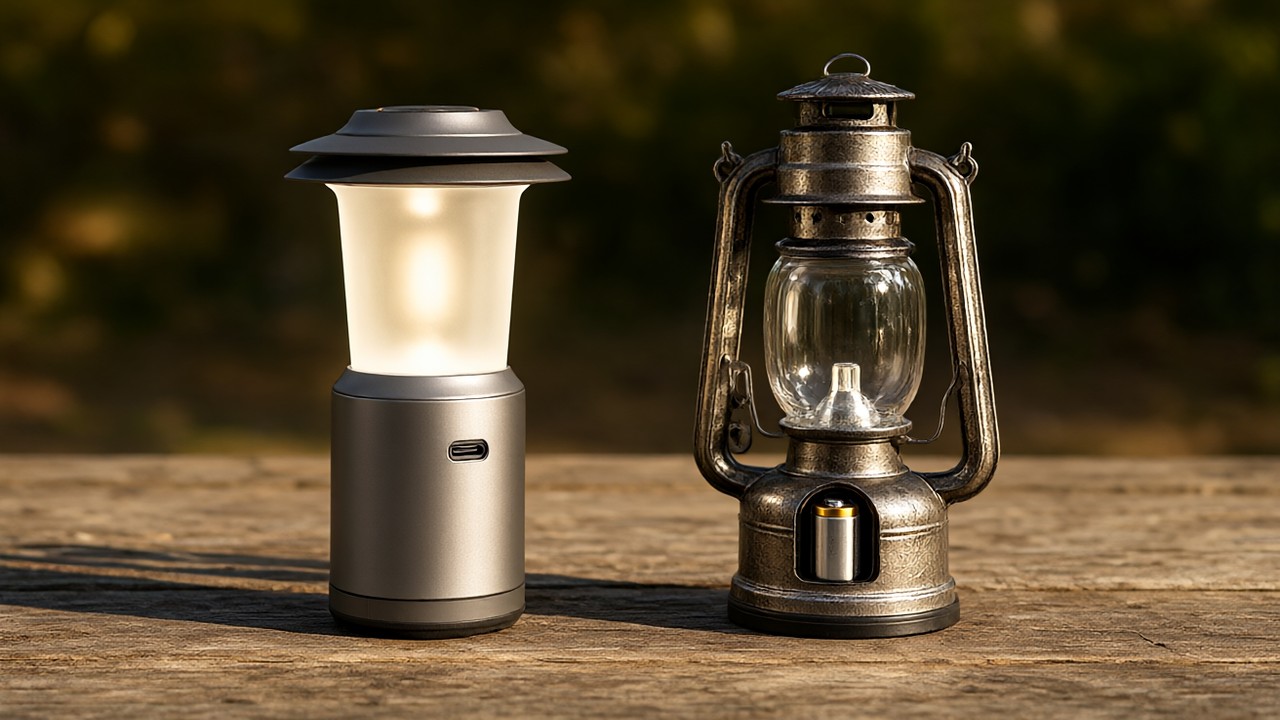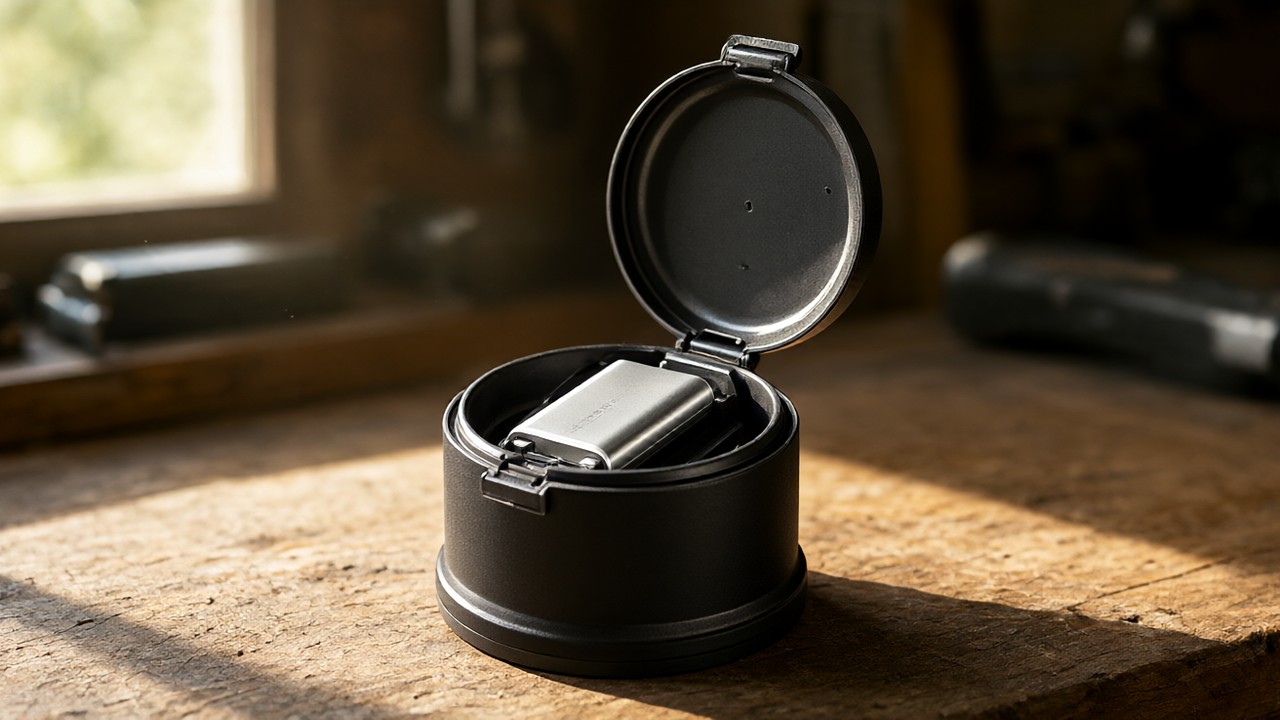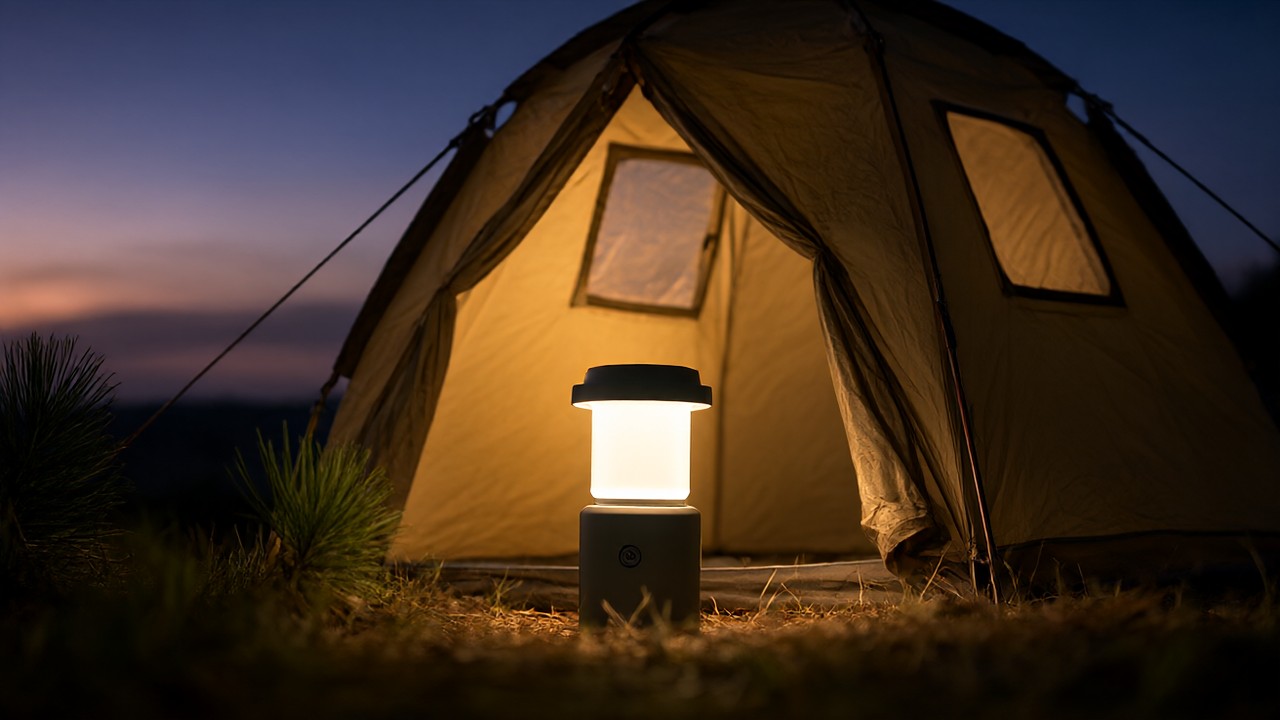
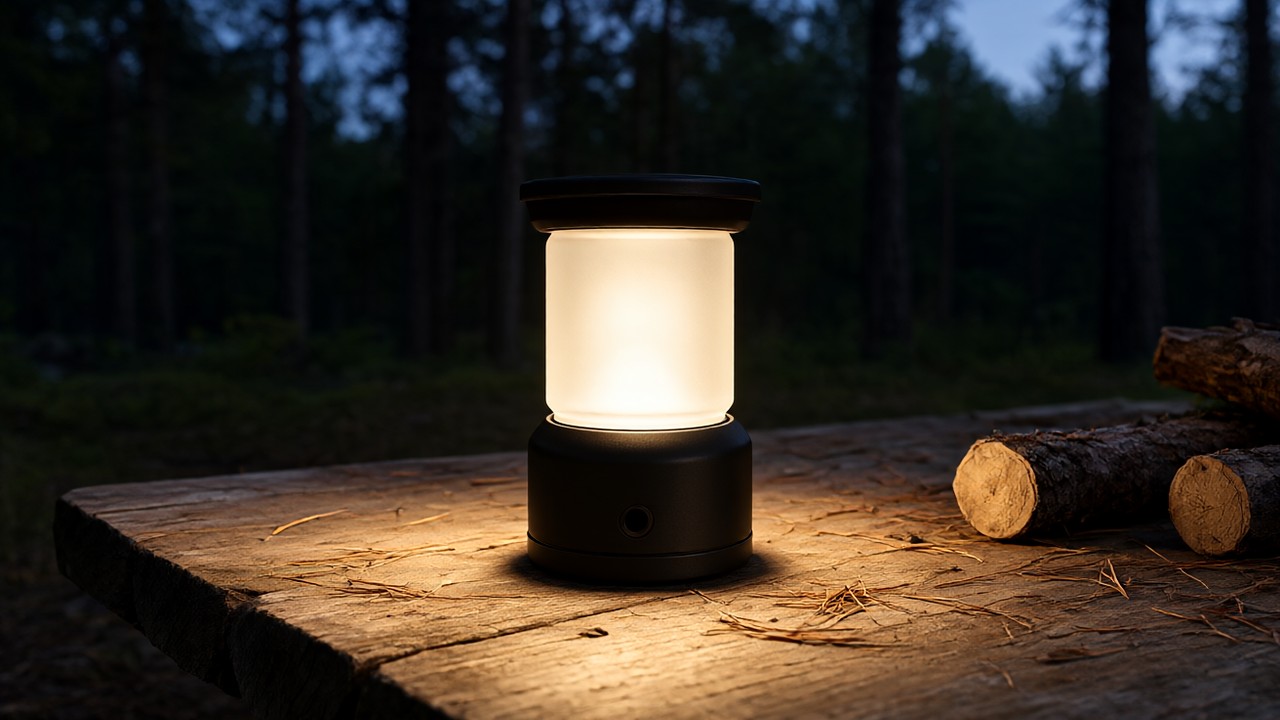

Lumens measure total light output, and the right number for a camping lantern is smaller than most people think. For a 2 to 4 person tent, 100 to 300 lumens is plenty. For a picnic table, 300 to 600. For a group campsite, 600 to 1,000. Anything above 1,000 is rarely useful and often too bright for enclosed spaces.
A lumen is the SI unit of luminous flux: the total visible light a source emits in all directions per unit time.
The short version: buy in the 200 to 400 lumen range for your first lantern. It lights a tent, handles table tasks, and runs 8 to 12 hours on a charge. Go lower only for backpacking; go higher only for group camps or vehicle camping.
Key facts: lumens are not linear in perception (200 lumens looks about twice as bright as 100, not four times). ANSI FL1 is the standardized test method; marketing lumens without ANSI labeling are often inflated. Runtime and brightness move in opposite directions on the same battery.
What a Lumen Actually Measures
A lumen is a unit of luminous flux: the total visible light emitted by a source in all directions. It says nothing about where that light goes, how focused it is, or how it looks to your eyes. That is why two lanterns with the same lumen rating can feel very different.
For camping, lumens are a useful shorthand but not the whole story. Picture the difference: a headlamp beam punches a bright circle on a trail, while a lantern fills a tent with soft, even light.
A 300 lumen lantern with a wide, diffuse beam fills a tent gently. A 300 lumen lantern with a narrow beam punches a hole in the darkness but leaves the corners dark. Check the beam pattern, not just the number.
Output and beam spread are independent: a high-lumen lantern with a narrow beam can light a smaller area than a lower-lumen lantern with a wide beam.
The other number you will see is lux, which measures illuminance at a specific distance and area. Lux = lumens divided by area. A lantern can have high lumens but low lux at 3 meters if the beam spreads wide.
For camping, lumens is the practical spec; lux matters more for task lighting like cooking or reading. Lumens measure light output; watts measure power consumption. LED lanterns produce more lumens per watt than older technologies, so a 5-watt LED can outshine a 60-watt incandescent. For camping, lumens is the spec that matters.
Lumens by Use Case
Use these ranges as starting points. They assume a warm to neutral white color temperature and a diffuse beam. Higher lumens shrink the runtime: a 400 lumen lantern on high lasts roughly half as long as the same lantern on 200 lumens.
- 50 to 100 lumens: backpacking, reading in a tent, nightlight for children, emergency backup.
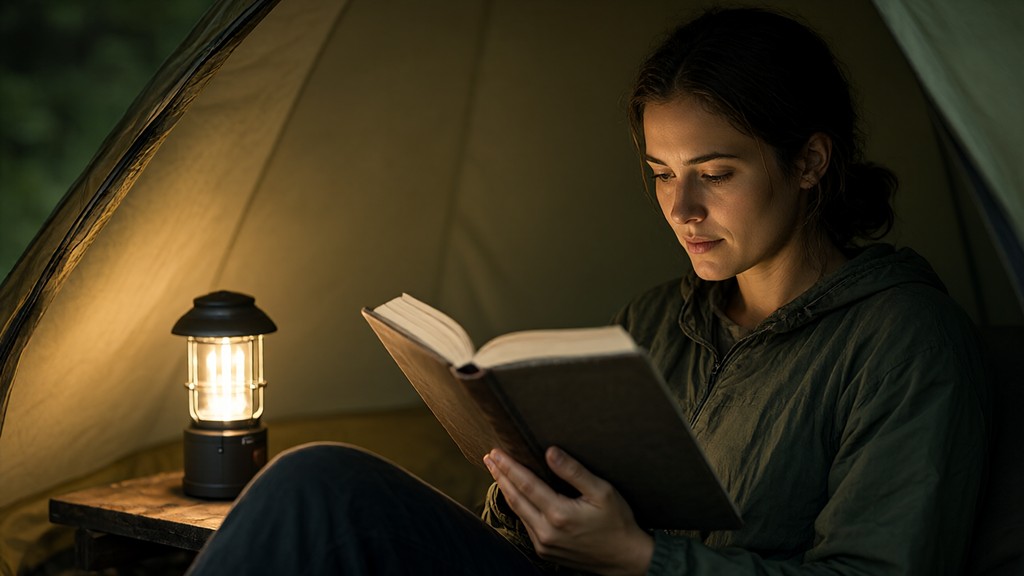
- 100 to 300 lumens: tent interior for 2 to 4 people, ambient camp light, soft evening mood.
- 300 to 600 lumens: picnic table task light, cooking, card games, gear repair.
- 600 to 1,000 lumens: group camp area, large tent, basecamp kitchen.
- 1,000+ lumens: search and rescue, large group sites, vehicle camping. Overkill for most weekend trips.
Brightness and battery life move in opposite directions: doubling lumens roughly halves runtime on the same battery. A 400 lumen lantern on medium (200 lumens) runs twice as long as the same lantern on high. For tent-specific picks, see our best camping lanterns for tents.
Why More Lumens Is Not Always Better
The biggest buying mistake in camping lanterns is chasing the highest lumen number. Three reasons to resist.
One insight that surprises first-time buyers: a 300 lumen lantern with a wide, frosted globe often feels brighter in a tent than a 600 lumen lantern with a narrow beam.
The reason: the wide beam bounces off tent walls and fills the space, while a narrow beam punches a hole in the darkness. Brightness is not just output; it is how the light interacts with the room.
Glare in small spaces. A 1,000 lumen lantern in a 2-person tent is blinding. You lose night vision, shadows become harsh, and the light bounces off tent walls. For tent use, 100 to 300 lumens is the comfortable ceiling.
Battery drain. High output drains the battery fast. A lantern rated for 10 hours on medium may last only 2 hours on high. If you rarely use high mode, you paid for capacity you do not use.
Heat and weight. Higher output needs bigger LEDs, bigger drivers, and bigger batteries. The lantern gets heavier and warmer. For backpacking, every ounce matters.
The right approach: buy for your most common use case, not your worst case. A 300 lumen lantern with a dimmer covers 90 percent of camping. Add a headlamp for the rare moment you need a focused, bright beam.
ANSI FL1: The Rating That Actually Means Something
ANSI FL1 is a standardized test protocol for flashlights and lanterns. It defines how output, runtime, beam distance, and impact resistance are measured. Two ANSI-rated lanterns are comparable because they were tested the same way.
Marketing lumens without an ANSI label are often inflated. A brand might quote the LED chip’s theoretical maximum, or measure at the chip before optical losses, or test at a temperature that flatters output. ANSI testing accounts for real-world conditions.
When comparing lanterns, prefer ANSI FL1 rated output. If a brand does not publish ANSI numbers, treat the lumen claim as an upper bound, not a guarantee. Many reputable brands (Goal Zero, BioLite, Black Diamond) publish ANSI numbers. Budget brands often do not.
Color Temperature and Perceived Brightness
Color temperature, measured in Kelvin, changes how bright a lantern feels even at the same lumen rating. Warm white (2,700 to 3,000K) feels softer and less intense because it emits less blue light, which the eye and brain read as “evening.” Cool white (5,000 to 6,500K) feels harsher and brighter because it mimics midday sun. Neutral white (3,500 to 4,500K) sits in between.
This means a 200 lumen warm-white lantern can feel dimmer than a 200 lumen cool-white lantern, even though the output is identical. If you prefer warm light for tent use, you may want to step up 50 to 100 lumens to compensate.
Many lanterns offer both modes. Some add a “candle flicker” mode for atmosphere. For reading and cooking, neutral to cool white shows detail better. For winding down at night, warm white is easier on the eyes and less disruptive to sleep.
Dimmers vs Fixed Modes
A lantern with a continuous dimmer lets you tune brightness to the moment. Fixed-mode lanterns (low, medium, high) often jump from too dim to too bright with nothing in between. For tent use, the ability to set 150 lumens instead of choosing between 50 and 300 matters more than the peak number.
Look for a dimmer that remembers your last setting, so you do not cycle through modes every time you turn it on. Some lanterns also offer a “moonlight” mode (1 to 5 lumens) for navigating at night without waking others.
How to Test Brightness Before You Buy
If you can handle the lantern in a store, turn it on in the darkest corner you can find. Hold it at arm’s length and look at the spill pattern on the floor. A good lantern lights a wide, even circle. A poor one has a bright hotspot and dark edges.
Online, look for beam shot photos in reviews, not just spec sheets. Reviewers often photograph the lantern in a dark room or tent, which shows the real pattern. Manufacturer photos are usually shot in daylight or with exposure tricks that hide the truth.
Also check the runtime at medium brightness, not at the lowest setting. Brands inflate runtime by quoting the moonlight mode. A lantern that runs 100 hours on 5 lumens but only 4 hours on 200 lumens is not a 100-hour lantern for practical use. For the full selection framework, see our LED camping lanterns complete guide.
When High Lumens Is the Wrong Choice
More lumens is not always better. Three cases where high output backfires.
In a small tent. A 1,000 lumen lantern in a 2-person tent destroys night vision and bounces harsh light off walls. 100 to 300 lumens is the comfortable ceiling.
On battery life. High output drains the battery fast. A lantern rated for 10 hours on medium may last 2 hours on high. If you rarely use high mode, you paid for capacity you do not use.
On weight. Higher output needs bigger LEDs, drivers, and batteries. The lantern gets heavier and warmer. For backpacking, every ounce matters.
Putting It Together
For your first camping lantern, target 200 to 400 lumens with a warm-white mode and a continuous dimmer. That range covers tent, table, and trail for most campers without glare or excessive battery drain.
For the full picture on choosing a lantern, see our LED camping lanterns complete guide. For power source trade-offs, read our rechargeable vs battery camping lantern comparison. If you camp in a hot tent, warm low-lumen light pairs well with a safe stove setup. See our hot tent stove guide.
For wet-weather and off-grid use, see our waterproof and solar camping lantern guides.
Last updated: 2026-11-17. Editorial content based on ANSI FL1 testing standards and manufacturer specifications. Amazon affiliate links may appear in related guides.