
LED camping lanterns are portable, battery-powered lights that use light-emitting diodes to produce illumination for camping, with no flame, no fuel, and minimal heat. They are the default light source for modern camping because they run cool, last thousands of hours, and use a fraction of the power of gas or incandescent lanterns.
The right one for you depends on three things: how bright you need (lumens), how you’ll power it (battery, rechargeable, solar), and where you’ll use it (tent, table, or trail). This guide walks through all three so you pick once and buy right.
The short version: for most weekend campers, a 200 to 400 lumen rechargeable lantern with a warm-white mode is the sweet spot. It lights a 4-person tent, runs 8 to 12 hours on medium, and charges from a power bank. Go higher only for group camps or basecamp; go lower only for backpacking.
Key facts: LED chips last 25,000 to 50,000 hours. Typical camping output ranges from 50 lumens (backpacking) to 1,000+ lumens (basecamp). Rechargeable Li-ion models dominate the market; alkaline and solar fill specific niches. Gas lanterns still win on raw brightness and nostalgia but lose on safety, heat, and fuel cost.
What an LED Camping Lantern Is (and Why It Replaced Gas)
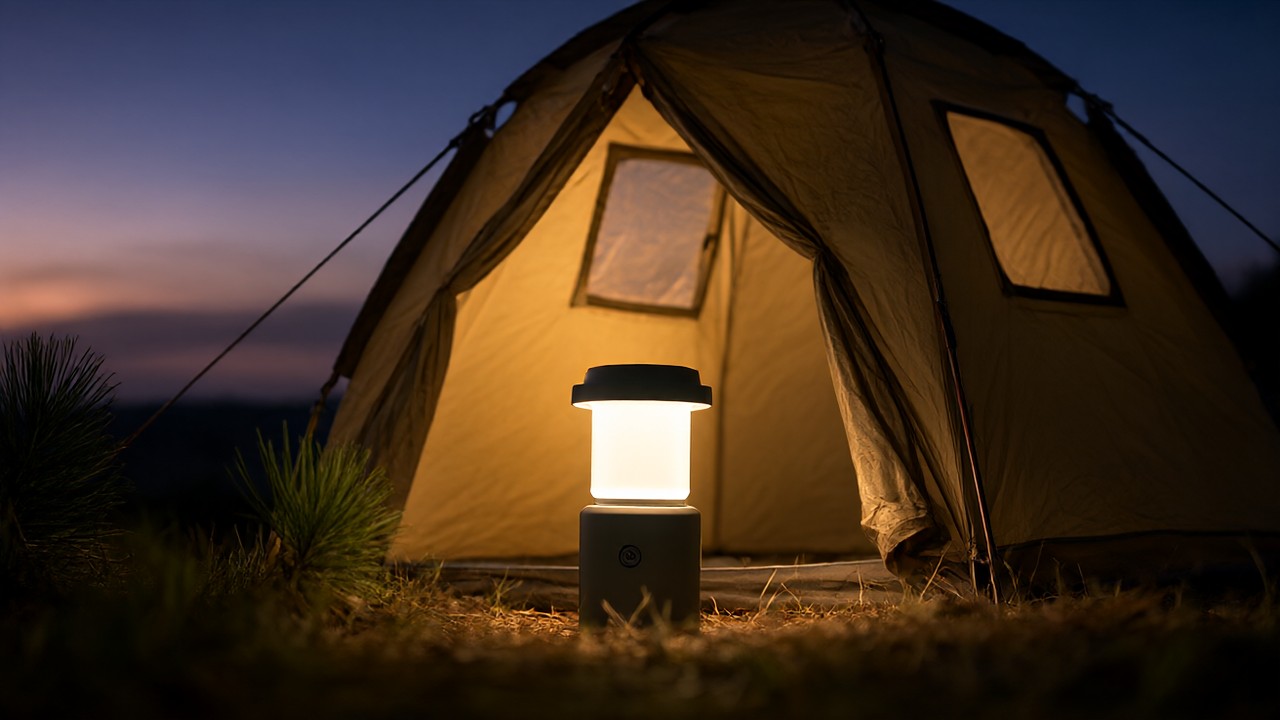
An LED camping lantern is a portable light that uses light-emitting diodes instead of a flame or filament. The diodes convert electricity directly into light with very little heat, which is the single biggest reason they took over camp lighting.
Gas lanterns (propane or butane) burn fuel through a mantle to produce light. They are bright, warm, and romantic. They are also hot enough to burn skin or melt tent fabric, they consume fuel you must carry, and they produce carbon monoxide in enclosed spaces. LED lanterns remove all three problems.
The trade-off is character. A gas lantern hisses and glows amber, casting dancing shadows across canvas. An LED hums silently and holds steady. An LED can mimic warmth with a warm-white mode, but it is still a steady, electronic light. For most campers the safety and convenience win. For atmosphere-only campers, a hybrid (LED for tasks, gas for mood) is common.
How LED Camping Lanterns Work: Lumens, Color Temperature, and CRI
Three numbers describe how an LED lantern looks. Understanding them prevents buying the wrong light.
Lumens measure total light output. More lumens means a brighter lantern, but brightness is not the whole story. A 1,000 lumen lantern in a small tent is blinding. A 100 lumen lantern on a picnic table is dim. Match lumens to the space, not to the biggest number on the box.
Color temperature is measured in Kelvin. Warm white (2,700 to 3,000K) mimics candlelight and is easy on the eyes at night because it suppresses less melatonin than cool light. Cool white (5,000 to 6,500K) looks like daylight and shows detail better but feels harsh in a tent and can delay sleep. Many lanterns offer both; some add a “candle flicker” mode for atmosphere.
CRI (Color Rendering Index) measures how accurately colors appear under the light. A CRI of 80 or higher is fine for camping. Below 70, reds and greens look muddy. Premium lanterns hit 90+. Most campers never notice; photographers and cooks do.
One more term you will see: ANSI FL1. This is a standardized test method for flashlight and lantern output. ANSI-rated lumens are tested the same way across brands, so two ANSI-rated lanterns are comparable. Marketing lumens (no ANSI label) are often inflated. Prefer ANSI FL1 ratings when comparing.
Types of LED Camping Lanterns
The market splits into five common types. Each fits a different camping style.
- Traditional upright lanterns (cylinder or globe shape). Bright, stable on a table, good for group camps. Heavier and bulkier. Examples: Goal Zero Lighthouse, BioLite AlpenGlow.
- Collapsible or inflatable lanterns. Pack flat, weigh little, moderate brightness. Great for backpacking and emergency kits. Examples: LuminAID, MPOWERD Luci.
- Lantern-flashlight hybrids. A lantern body with a focused beam on one end. One tool for tent and trail. Slightly compromised at both jobs.
- String and area lights. Not a lantern but often used as one. Diffuse, low-glare, good for tent interiors and food prep. Examples: LED strip lights, fairy lights.
- Headlamps used as lanterns. A headlamp hung from a tent loop lights a small space well. Not a replacement for a table lantern but useful in a pinch.
For a first purchase, an upright rechargeable lantern covers 80 percent of camping scenarios. Add a collapsible lantern only if pack weight matters. The choice between types comes down to weight versus output: uprights win on brightness, collapsibles win on pack size.
How to Choose: The Decision Matrix
Answer these four questions in order. Each narrows the field.
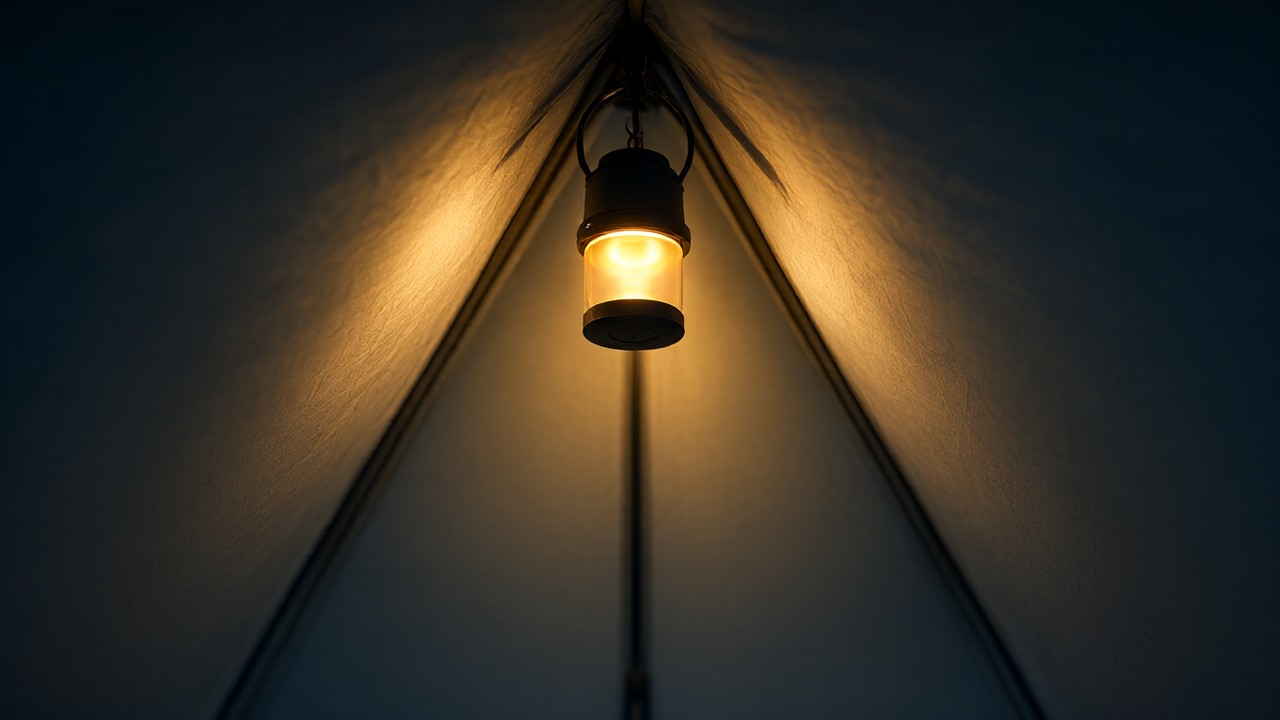
1. Where will it live? Tent interior needs soft, warm, low-glare light (100 to 300 lumens). Picnic table needs task light (300 to 600 lumens). Basecamp or group site needs area light (600 to 1,000+ lumens). Buying a 1,000 lumen lantern for a 2-person tent is a common mistake.
2. How long between charges? Weekend trips (2 nights) need 8 to 12 hours of runtime on medium. Week-long trips need either a large battery (10,000+ mAh) or a way to recharge (power bank, solar, car USB). Check runtime at medium brightness, not at the lowest setting, which is how brands inflate the number.
3. How will you carry it? Car camping: weight does not matter, prioritize brightness and features. Backpacking: every ounce counts; target under 8 oz and collapsible. Canoe or kayak camping: waterproof rating matters more than weight.
4. What is your budget? Under $30 buys a basic alkaline lantern that works. $30 to $80 buys a good rechargeable with multiple modes. $80 to $150 buys premium features: high CRI, USB-C, power-bank output, IP67 waterproofing. Above $150 is diminishing returns for most campers.
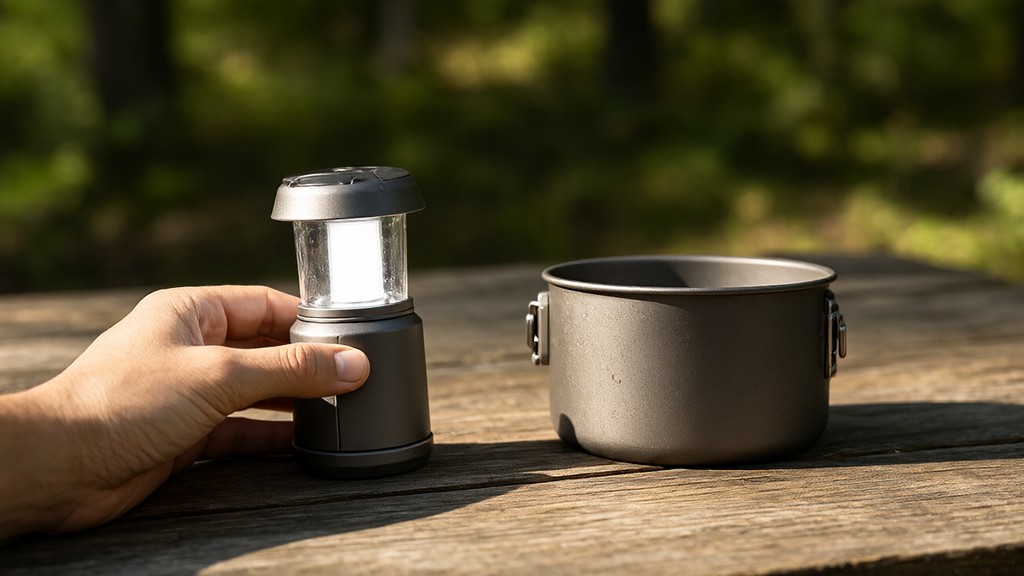
Power Sources Compared
| Power source | Pros | Cons | Best for |
|---|---|---|---|
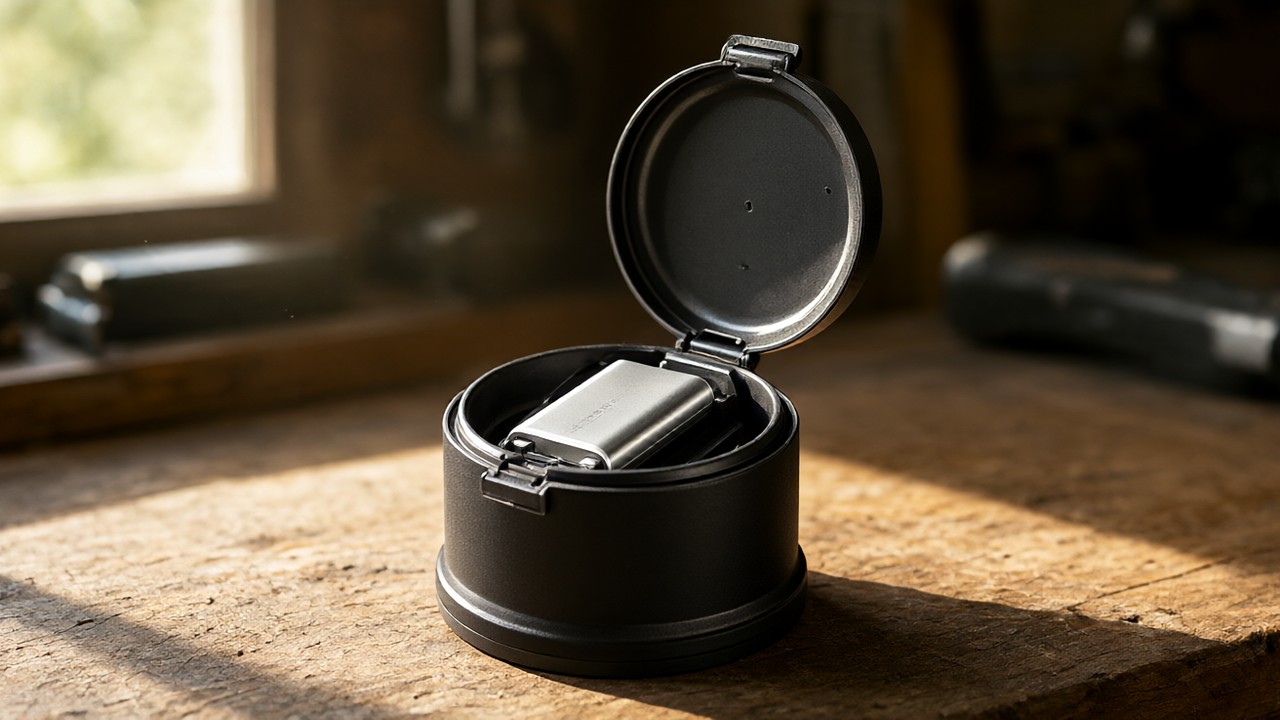
| Rechargeable Li-ion (built-in) | High capacity, USB-C, can charge phone, low running cost | Dead battery means no light; needs power source to recharge | Most campers, weekend to week-long trips |
| Alkaline (AA/AAA/D) | Available anywhere, instant swap, long shelf life | Heavy, recurring cost, lower capacity per weight | Emergency kits, infrequent campers, backup |
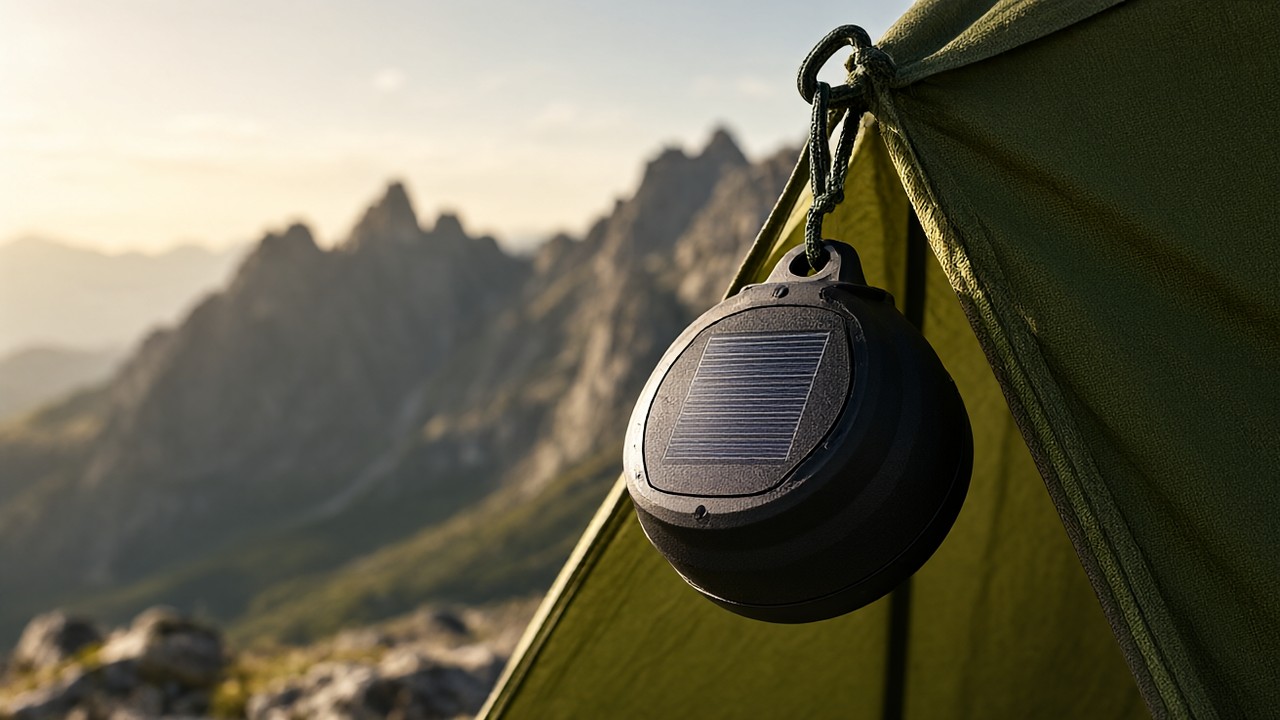
| Solar (built-in panel) | Unlimited energy in sun, no cables needed | Slow to charge, weak in clouds, panel adds bulk | Backpacking, off-grid, emergency prep |
| Hand crank | Works with zero external power | Tiring, low output, impractical as primary light | Emergency and survival kits only |
| USB power bank (lantern as load) | Flexible, uses gear you already carry | Drains your phone battery, extra cable | Ultralight backpackers |
The dominant market trend is rechargeable Li-ion, and for good reason. A 5,000 mAh lantern on medium (200 lumens) runs 10 to 15 hours and recharges a phone once. For most campers that is the right trade. Keep alkaline as a backup in the car kit.
Many rechargeable lanterns include a USB output port that can charge a phone or headlamp. Output is slow (usually 1 to 2 amps), so it is an emergency top-up, not a full charge. Using it drains the lantern battery.
Brightness Guide: Lumens by Use Case
Lumens are not linear in perception. A 200 lumen lantern looks roughly twice as bright as 100 lumens, not four times. Use these ranges as starting points.
One insight that surprises most campers: a 200 lumen lantern inside a tent feels brighter than a 400 lumen lantern outdoors, because tent walls reflect and amplify light while open air absorbs it. Match lumens to the space, not to the biggest number on the box.
- 50 to 100 lumens: backpacking, reading in a tent, nightlight for kids.
- 100 to 300 lumens: tent interior for 2 to 4 people, soft ambient light.
- 300 to 600 lumens: picnic table task light, cooking, card games.
- 600 to 1,000 lumens: group camp area, large tent, basecamp.
- 1,000+ lumens: search and rescue, large group sites, vehicle camping. Overkill for most.
Tip: a lantern with a dimmer (not just 3 fixed modes) lets you tune brightness to the moment. Fixed-mode lanterns often jump from “too dim” to “too bright” with nothing in between. Brightness and battery life move in opposite directions: doubling lumens roughly halves runtime on the same battery.
Runtime and Battery Life: What the Box Does Not Tell You
Runtime claims are the most misleading spec in lantern marketing. Three things to check.
Which mode the runtime refers to. “Up to 100 hours” usually means the lowest mode (often 5 to 10 lumens), not the mode you will actually use. Look for runtime at medium (200 to 300 lumens) and high separately.
Battery degradation. Li-ion capacity drops over charge cycles. A lantern rated for 10 hours on a new battery may deliver 7 hours after a year of use. Quality brands publish cycle life (500+ cycles is good).
Cold weather. Li-ion output drops below freezing because ion mobility in the electrolyte slows and internal resistance rises.
A lantern rated for 10 hours at 70 degrees Fahrenheit may deliver 6 hours at 20 degrees. Alkaline handles cold better but with lower capacity. If you camp in winter, add a 20 to 30 percent runtime margin or carry a spare power bank kept warm in your sleeping bag.
Durability and Weather Resistance (IP Ratings)
IP ratings tell you how much water and dust a lantern survives. The two digits after “IP” are the rating: first digit is dust (0 to 6), second is water (0 to 8).
- IPX4: splash-resistant. Fine for light rain and dew. Most lanterns.
- IPX5 to IPX6: water-jet resistant. Handles heavy rain and hose spray.
- IPX7: submersible to 1 meter for 30 minutes. Survives a drop in a stream.
- IP67 or IP68: dust-tight and submersible. Premium and overkill for most camping.
For car camping, IPX4 is enough. For canoe, kayak, or backpacking in wet climates, aim for IPX7 or higher. Also check the drop rating (often 1 meter) if you camp on rock or hard ground.
LED vs Other Lighting: Comparison
| Factor | LED lantern | Gas lantern (propane/butane) | Incandescent lantern | Candle lantern |
|---|---|---|---|---|
| Brightness | 50 to 1,000+ lumens | Very bright (200 to 400 lumens typical) | Low to moderate | Very low |
| Heat output | Minimal (safe in tents) | High (fire and burn risk) | Moderate | High (open flame) |
| Carbon monoxide | None | Yes (ventilate or use outdoors only) | None | Yes (flame) |
| Runtime per fuel | 8 to 100+ hours per charge | 7 to 14 hours per canister | Short (bulb life limited) | 9 to 12 hours per candle |
| Fuel cost | Near zero (electricity) | $3 to $6 per canister | Bulb replacement | $1 to $3 per candle |
| Weight | Light to moderate | Moderate (plus fuel) | Moderate | Very light |
| Atmosphere | Good with warm mode | Excellent (flickering flame) | Poor | Excellent |
| Safety in tent | Safe | Unsafe (CO, heat, fire) | Safe | Unsafe (fire) |
The conclusion: LED wins on safety, cost, and convenience. Gas wins on atmosphere and raw punch. Many experienced campers carry both: an LED for tasks and safety, a gas lantern for evening mood around the picnic table (outdoors only).
Best Use Cases by Camping Style
Car camping and family camping: upright rechargeable lantern, 300 to 600 lumens, warm/cool modes, IPX4 or better. Weight does not matter; prioritize brightness and runtime.
Backpacking: collapsible or inflatable lantern, 50 to 150 lumens, under 8 oz, solar or USB recharge. Or skip the lantern and use a headlamp hung from the tent loop.
Canoe, kayak, and boat camping: IPX7 or higher, floating design if possible, lanyard attachment. Water and darkness are a dangerous combination.
Winter camping: cold-rated Li-ion or alkaline backup, higher lumen output (shorter days), red-light mode to preserve night vision.
Emergency and home backup: hand-crank plus solar hybrid, long shelf life, simple controls. Brightness is secondary to reliability.
Match the lantern to the trip, not the trip to the lantern: car camping prioritizes output over weight, while backpacking inverts that priority.
Safety: Carbon Monoxide, Heat, and Fire
Using an LED lantern inside a tent is safe because LEDs produce no carbon monoxide and very little heat. But a few rules still apply.
Carbon monoxide. LEDs produce none. Gas lanterns do. Never use a gas lantern inside a tent, vehicle, or enclosed shelter. If you use gas at all, keep it outdoors and ventilated. A $25 CO detector is cheap insurance if you ever burn fuel near sleeping areas.
Heat. LEDs run warm, not hot. They will not melt tent fabric or burn skin. Gas lanterns and candles will.
Fire. LEDs have no flame. Keep them away from flammable material the same way you would any electronics: do not bury them in sleeping bags or leave them on while charging.
Battery safety. Use the charger that came with the lantern. Do not leave Li-ion batteries charging unattended for long periods. Store spares in a cool, dry place away from metal objects that could short the terminals.
Maintenance and Storage
LED lanterns need almost no maintenance, but a few habits extend their life.
- Wipe the lens and body after each trip; dirt cuts output and yellows plastic.
- Store with a partial charge (40 to 60 percent) for Li-ion. Full or empty storage degrades the battery.
- Remove alkaline batteries before long storage to prevent leakage.
- Check seals and O-rings annually if the lantern is waterproof.
- Clean solar panels with a damp cloth; dirty panels charge slowly.
With basic care, a quality LED lantern lasts 5 to 10 years. The battery, not the LED, is usually the first thing to fail.
Battery care matters more than LED care because the diode outlasts the battery by years.
Limits: When an LED Lantern Is the Wrong Choice
LED lanterns are not always the best light. Three cases where another option wins.
Atmosphere-only camping. If you want the flicker and warmth of a flame for mood, a gas lantern or candle lantern beats any LED. LEDs can mimic warmth but not the dance of a flame.
Extreme cold without backup. Li-ion output drops below freezing. If you camp below 20 degrees Fahrenheit regularly, carry an alkaline backup or a LiFePO4 model.
Very large group sites. A single LED lantern maxes out around 1,000 lumens. For a 20-person camp, you need multiple lights or a high-output gas lantern.
Putting It Together
Choosing the right lantern and powering it well are the two decisions that matter most. If you buy one lantern, make it a rechargeable upright model in the 200 to 400 lumen range with a warm-white mode and at least IPX4.
That covers tent, table, and trail for most campers. Add a collapsible lantern for backpacking and a gas lantern only if you want flame atmosphere outdoors.
If you camp in a hot tent, pairing a safe LED lantern with a properly ventilated stove setup matters. See our hot tent stove guide for stove selection and CO safety.
For specific model picks, see our best LED camping lanterns guide, best rechargeable camping lanterns, and best camping lanterns for tents.
For battery care and replacement, see our camping lantern battery replacement guide.
For wet-weather and waterproof options, see our waterproof camping lanterns guide. For solar and off-grid use, see our solar camping lanterns guide.
For kids, see our camping lanterns for kids guide. For budget options, see our budget camping lanterns guide. For power-bank models, see our camping lanterns with power bank guide.
For a deeper dive into brightness numbers, see our guide on how many lumens you actually need for a camping lantern. For power source trade-offs, read our rechargeable vs battery camping lantern comparison.
Last updated: 2026-11-17. Editorial content based on product specifications, manufacturer documentation, and ANSI FL1 testing standards. Hands-on testing not performed for every product mentioned; recommendations combine spec analysis with owner-reported performance. Amazon affiliate links may appear in related guides.